
A friendly reminder that if you still use Google reader, it will be removed on July 1, 2013. Don’t get stuck resubscribing to your favorite blogs 🙂
While you’re at it, check out a few of the blogs I never miss:
Happy Reading! xo-Angie
Angie Flanagan

A friendly reminder that if you still use Google reader, it will be removed on July 1, 2013. Don’t get stuck resubscribing to your favorite blogs 🙂
While you’re at it, check out a few of the blogs I never miss:
Happy Reading! xo-Angie


There. Just over the horizon. Hidden behind the loping gallop of grey waves against a grey sky. There was land. None knew it but the captain and his navigator…and Samuel Bellamy, a lowly sailor, though his good looks were unsullied by the hard life of his rank. Samuel paid no mind to the constant sway of the ship beneath his feet. He did not bother with the smell of rotten wood and flesh and food or briny air with the metallic threat of rain.
A calling as strong as the sea, a scent that rose in the air. Loamy and dusty. A tender shoot, brand new that fluttered on the spring wind and sang to Samuel of earthly things. That place of new beginnings, opposite of the ancient sea. Samuel felt his heart rise in his chest the way the gulls rose to the sky.
“Land ahead!” he cried before he could stop himself.
The first mate spit over the side of the boat. “You mind your place, boy, or it will be a lashing for you again.” The first mate pointed a finger swollen with gout. “Land ahead!” he cried.
Land. Samuel tripped his way down the docks, but the ocean called out to him as old friends do when they part. He stopped to watch twilight spread over the harbor.
“You are my last,” he said to the decrepit ship that had been more a home to him than anywhere else. He turned his back on ship and sea. The town streets lit happy and yellow. The townspeople dressed bright and lively. Out on the cliffs beyond the city a white clapboard cottage stood dark and silent.
“When I have the money,” said Samuel. “I will buy that cottage. I will fill it with food and furniture and neither of us will ever be empty again.”
He found a tavern to drink off his sea legs. His first steps on the soil of the American colonies, where a man might work hard enough to own a bit of soil for himself.
Can land be owned? A voice poked at the back of Samuel’s mind. Can you really own something that can’t be carried away on your back?
“Ach,” Samuel yelled at himself as he stumbled through cobbled Cape Cod streets, “that is nothing more than the drink talking. Men own land. That’s what men do. Land isn’t like the ever changing sea. And it isn’t plate or a fork or a farthing either.”
You haven’t told me one thing about land but what it isn’t, said the voice. You know nothing of land. It is a thing as living and breathing as the sea. Your ancestors gave up the land long ago, Samuel Bellamy. You will never own one speck of dirt because you are of the sea.
“No, not anymore I’m not. I’m a man.”
Are you now?
Samuel took another beer and drank it fast. The voice drown beneath it, but that night Samuel dreamt that he swam inside the dark and endless sea. The dark was frightening, but he was free. Free of the smell of rot. Free from being owned by the ship’s log and captain and company.
The land ties you down, Samuel Bellamy. The ocean sets you free.
Day came bright and sunny. Samuel’s head barely hurt from the night before. He walked down a path that wound into an orchard of apples. The blossoms on the trees blew everywhere in clouds of white against a blue sky. Here was a world fresh with spring. The call of the dark and endless sea faded from his memory.
Today holds promise, he said to himself. I can feel it in my bones. No voice invaded his mind to tell him he was wrong. Maybe that voice was dead and gone.
“Would I walk down that path again?” Samuel often asked himself when the apple orchard was far behind him. “If I knew then that the feeling in my bones was the promise of love. If I knew then that with love comes the torment of hope…would I walk down that path again?
“Yes.”
Maria sat on a bench in the middle of the orchard. She started to sing, her voice as pure and light as the apple blossoms that fell all around her.
Here is my hidden place
Where I grow the dark
To shroud the light of love
That mythic, burning passion
Acceptance and desire
Hope and longing
The push and pull of twin souls
Kisses turned to constellations
I will not share the lost belief
Hopeless hope grown timeworn
Yellowed and…
She looked up from the reverie of her song. “Who are you?” she asked.
Samuel smoothed down his tattered clothes. He ran his fingers through hair that needed cutting. I am not worthy of her, he thought.
“Samuel,” he said.
“Why are you walking so fast on such a beautiful day?”
He wanted to leave her before she laughed at him.
“I am walking so fast because I haven’t got any place as pretty to sit,” he said.
“This half of my bench is free.” Maria slid to the edge.
“I have found very little in life to be free.”
“Hmmm,” Maria tilted her head, and blond curls fell across her face in a way that made Samuel hold his breath. “You are more than welcome to pay for it if that makes you more comfortable.”
“Do I look like someone who has much to pay you with?”
“There is more a girl might want than money.”
“What else might a girl want?” What else in the world could there be?
“If a girl asks a man to sit with her on a bench, chances are she might only wish to be repaid with a kiss.” Her words were bold, but she blushed and looked away.
That bench, which was the only place Samuel wanted to be, seemed a million miles away. It would take an eternity of steps to get there. Yet somehow Maria’s lips pressed soft against his, she laughed (not at his expense but at her pleasure), and then she was gone. The best day of his life stretched a lifetime and over too soon all at once.
Samuel thought every meeting with Maria would be his last. He woke from his endless ocean dreams in the middle of the night and burned with the thought of her.
“Send Maria to me one more time,” he prayed to the stars. “Let me kiss her once more, and I will give you anything in return.”
With all of his bartering and promises to heaven, it never dawned on Samuel that Maria came to him each time of her own free will and simply because she liked him too.
But she was rich and he very poor. Her parents didn’t approve of the match.
“I want run away with you,” Maria whispered to him under the moonlight.
“To be a poor man’s wife?”
“You will not be poor for long. I know it.”
“But I am poor now, and I have not got any prospects for that to change. I will not have you alone to scrub the floors with a baby tied to your back and another at your knee and another in your belly. I won’t have you miss meals for children that keep coming. I will not listen to the crying and see them ask for more, and you look up at me with eyes that know I have nothing more to give.”
“Oh, Sam. I would never look at you that way.”
“You say that now because you can kiss me and then go back to your safe and comfortable home.”
“That is not my home. Not anymore. My home is with you.”
Samuel kissed every part of her face.
Tell her you love her. Every part of him ached to say it, but he would not let himself. He spread her out below him instead, and they both learned how to take the ache out between their legs.
Maria sang with joy the whole way back to her parent’s house. Samuel dragged his feet with dread beside her. What if he had made a child that would grow up as hungry and scared as he did? What if Maria was taken from him as his own mother had been?
She is not like your mother, said the old voice.
Samuel pushed the voice away, kissed Maria goodbye and tried to meet her radiant smile with one of his own. He walked to the cliffs and let himself feel the pull of the tide under the full moon.
You are a prince of the sea, the waves sighed. Come back to us. Come back.
“I will only come back if I can bring wealth right up to these cliffs.”
Oh, we will give you wealth. We will bring you back, right here in this place where the moon gives light to the sea foam. It is your destiny, Samuel Bellamy. Will you come back to us?
The smell of apple blossoms danced all around him, and the feel of Maria still clung to his skin. Maria wove deep into every dream he had for his future, and the waves offered all the answers.
“Yes,” he said.
Come. The sea swelled higher. We will make you King of the Pirates.
Maria woke with a lover gone to sea, and the first spark of new life in her belly. She went to the cliffs and looked out over the waves with only one song on her lips.
Samuel.
Coming tomorrow…Part 2 The Story of the King of Pirates

The midwife hurried through a cold, foggy night. She came with an empty stomach, because a family who lived in the sailors’ district could hardly be expected to offer more than dinner as payment. She would roll her eyes, say she could think better with food in her belly, and food she would get. It was always better when there were already children in the house with older girls who could tend to a good meal, but it would have to do.
It will have to do, she mumbled to herself as she knocked at the door. A woman’s shrill cry cut the thick air. The midwife pushed the door open. It looked like dinner would have to wait.
An old sailor, sea-battered and red faced, held his young wife around the shoulders. He wore a red coat and she was in a white nightgown. It seemed to the midwife…
View original post 830 more words

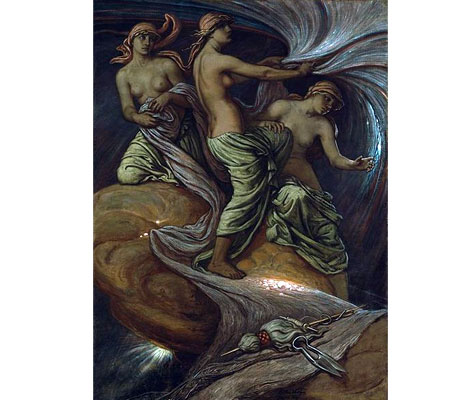
World War II on the Eastern Front. Ice storms rage around Nazi troops as they press through a forest outside Leningrad. Nestled within this scene of bitter cold and the mounting tension of combat, Lake Ladoga waits still, pure and remarkably unfrozen in spite of temperatures that dip below freezing. Battle erupts, soldiers clash, and the forest bursts into a wildfire. Soviet horses escape their stable, leap through the flames and dive into Lake Ladoga.
The next day, Italian war correspondent Curzio Malaparte walks out onto Lake Ladoga and finds himself surrounded by macabre ice sculptures of dead horses in their final gesture as the lake instantly froze around them. Finnish soldiers play on the horses like toys until the ice cracks in April, and the final moments of the horses of Lake Ladoga disappear below the surface.
Curzio Malaparte wrote about the horses of Lake Ladoga in his autobiographical novel Kaputt. Decades later, Malaparte’s story was taken up by astrophysicist Hubert Reeves as an example of a “phase shift” in physics. Normally when water reaches the point of freezing, the molecules turn in on themselves and crystalize. Sometimes when water is very still and pure there is nothing for the crystal to attach to, and the water remains liquid. There is tension in this state though, because the cold is pressing all around, and any disturbance will create an instant shift from liquid to ice. In the case of Lake Ladoga, it was the horses that allowed this shift to happen. Hubert Reeves used the horses of Lake Ladoga as a cosmic analogy of the early state of the Universe when pure energy shifted to matter. In the case of the Universe, it was the Higg’s Boson that allowed this shift to happen.
Click here to watch an example of super cool water.
American filmmaker Walter Murch spends his spare time consuming science books but while on location in France, he found himself out of reading material. He wandered down to the local bookshop where he picked up the French book on cosmology by Hubert Reeves with the Lake Ladoga anecdote by Curzio Malaparte. Murch became so fascinated by Malaparte’s story that he translated his work into English. Murch published The Bird That Swallowed its Cage: The Selected Writings of Curzio Malaparte. Murch also went on to make a documentary on the search for the Higg’s Boson where Malaparte’s horses of Lake Ladoga was used again to illustrate the phase shift from pure energy to matter.
Click here for more on Murch, Malaparte and the documentary Particle Fever
It seems to me that the story of Malaparte and Murch is its own little universal shift. An Italian anecdote on the ravages of war waits to be used in a French book on cosmology. A French book on cosmology waits to be read by an American filmmaker. Walter Murch is inspired to translate the nonscientific work of an Italian writer by a French work of science. Walter Murch goes on to make a documentary on the search for the Higg’s Boson, one of the greatest scientific discoveries of the 21st Century. There is the universe of the Universe, and then there is the universe of Nature, and then there are the universes of our own little, individual lives.
And like Lake Lagoda I have waited pure and still and tense with the potential for change.
What becomes of you when someone else happens along and dips their finger in your lake? A sudden shift from energy to matter…an idea turned to a story or a song or a work of art or a class you always wanted to take but never had the guts….
Ekpyrosis, a word of ancient Greek origin. Defined as “conversion into fire.” The destruction that will convert the cosmos to re-creation. And from this ancient Greek word was named the ecpyrotic model of the Universe, the theory that the Universe did not start out as a singularity, but as a collision of two three dimensional worlds.
And here is where my musings will completely destroy the hard work of physics.
In my imagination, we are all our own little worlds. Connected by a string, we are spread like a necklace through the darkness. Every now and then “someone” or “something” shakes the string. We collide unexpectedly (though perhaps fatefully) with another world, another person. A whole new universe is created from the collision of two bodies. We could call it ekpyrotic friendship, this shift that allows it to happen.
My physics may be faulty, but my intentions are true. The best things in life are born from the fire of ekpyrotic friendship. Thank the Universe for them.
…or I would be a lake pure and still but without a story to tell.
Stormy days remind me of the sea folk….

Long ago, the greatness of a warrior was measured by the strength of his adversaries. In all the known lands, the children of the Lochlann king were by far the best fighters. There were eight of them, four boys and four girls, all of them beautiful to behold with their fair skin, dark hair and wide, brown eyes.
At that time, and in that place, the mothers were responsible for training their children in combat, and the Lochlann queen was an unrivaled teacher. Each of her children held a special gift in endurance, strength, speed, grace and many other qualities beside, so that a band of eight of them might defeat a whole army. As they grew, they became the target of many who wished to be remembered in the songs for their bravery.
But the children were still quite young when their mother was laid to rest on a…
View original post 1,876 more words

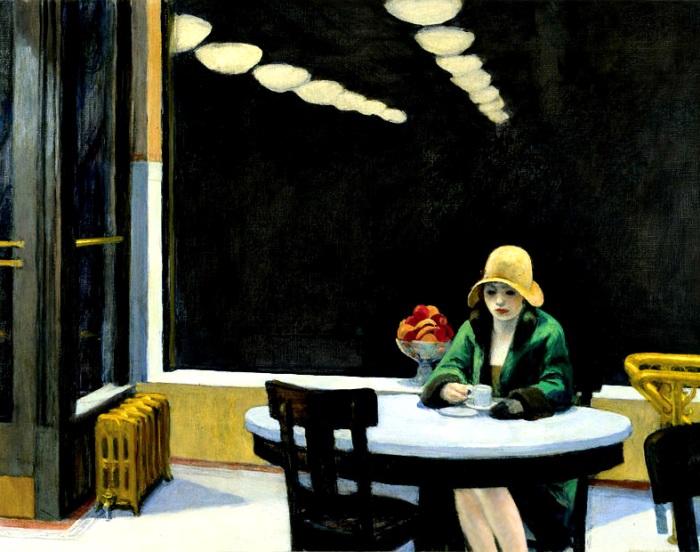
How he looked my way and I felt it
And yet he did not know me
And I could not find him
Try as I might
Behind the bricks he laid
In a mortar of busy jokes
And his lovely hands
And his shattered heart
But oh, he looked at me so well
And how across the room
I wanted to hold his hand
How I heard him speak to another
And wished it were to me he spoke
How he became a poem in my head
How he kissed me in the place above my dying heart
In the dark corner where no one else was looking
How his mouth slide warmth along my emptiness
And my soul whispered my god I might have loved him
If I hadn’t broken love to pieces
How painful it was to hold my soul captive
To pluck her song unsung from my mouth
When she only wished to set us free
But I knew the price my soul demanded
And tried to turn away
How I surrendered
And yet I could not find him
Try as I might
Behind the bricks he laid
In a mortar of busy jokes
And his lovely hands
And his shattered heart
But oh, he looked at me so well
Happy Memorial Day! From the Archives…

On November 1, 1945, my Grandpa Steve’s A 20 Bombardment Group prepared for a flight over a piece of ocean loosely held by the crumbling Japanese Empire. His orders were to attack the city of Kyushu on the Japanese mainland. If he managed to survive the first wave of his assignment (to fly within radar and give chase to Japanese pilots while simultaneously skip bombing every railroad tunnel), it would have to be done with precision…or there wouldn’t be enough gas to make it back across the ocean. The mission was so close to impossible, the Army Intelligence officer recommended that Grandpa write his last letter home.
Grandpa Steve never attacked the city of Kyushu, Japan. The planned invasion of the Japanese mainland never took place. America dropped atomic bombs on Nagasaki and Hiroshima instead. As with every war, one government’s collateral damage became someone else’s son…or daughter…or grandmother…or cousin…
View original post 1,084 more words


Bob Dylan will turn 72 on Friday
My first exposure to the potential for beauty in words and stories came from Bob Dylan. When I was a girl, my mom was brave enough to let me listen to her record collection. I’d spread the albums out and sit cross legged on the floor in front of the record player. Dylan’s voice wailed through the tinny speakers, imploring his lady to lay across his big brass bed. While the five year old me had no idea why anyone would want to get in bed with someone with clean hands and dirty clothes, I felt the rare beauty of the invitation in each poetic phrase.
John Wesley Harding and Oh, Mercy were the soundtracks to my first “grown up” college romance (free of the constraints of curfews and porch lights that flashed when I lingered in a boy’s car too long). Discovering someone who wasn’t as old as my parents who loved Dylan too seemed fateful at the time. Oh, how young we were. A few years later, I walked in the door with my first broken heart, turned on the radio and Just Like a Woman was playing. That seemed like fate too (and oh, what a jerk he was).
Dylan constantly reinvents himself and his music, but I have also reinvented and rediscovered his music as I’ve grown up. From records to tapes to cds to Pandora, Bob Dylan has woven tales about heroes and saints and lovers and heaven and hell. I’ve held my breath, waiting for a well turned phrase or suddenly discovered some new question to ponder. What does it mean to be a hero or a criminal or a lover or a loser? Mysteries quiet or bold left to linger unseen in a nearby world, like the flowers in my neighbor’s garden.
In his autobiography, Dylan says he had a second artistic renaissance at 40 years old, and the same has happened for me. He talks about those secret moments of wondering if he was too old, of wishing he could have been twenty years younger, but doing it anyway. I know my own artistic impact is a thousand times smaller, but I can relate.
I haven’t got a clue who Dylan really is as a person, but an artist with over 60 years of creative passion is worth celebrating. Wake up every day and make it happen. Happy Birthday, Bob Dylan.

The midwife hurried through a cold, foggy night. She came with an empty stomach, because a family who lived in the sailors’ district could hardly be expected to offer more than dinner as payment. She would roll her eyes, say she could think better with food in her belly, and food she would get. It was always better when there were already children in the house with older girls who could tend to a good meal, but it would have to do.
It will have to do, she mumbled to herself as she knocked at the door. A woman’s shrill cry cut the thick air. The midwife pushed the door open. It looked like dinner would have to wait.
An old sailor, sea-battered and red faced, held his young wife around the shoulders. He wore a red coat and she was in a white nightgown. It seemed to the midwife more like a murder scene than a birth.
“What are you doing to that poor girl,” the midwife cried.
“She will not stay in the bed. She says she wants to have the baby in the waves.”
The midwife looked out the tiny cottage window. Beyond were the cliffs, and the sea below. None of that could be seen through the fog. The midwife shook her head. “She will catch her death down there. And people would talk.”
The young woman moaned.
“Don’t worry love,” said the midwife. She stepped forward into the firelight. The mother to be was hardly more than a child. “We will not take you to the sea,” she whispered to the girl, “but there cannot be anything wrong with bringing a bit of the sea to you.” She turned to the husband. “Take a bucket down to the beach and fill it with water.”
“She will flee if I let her go.”
“She will die if she tries to fight you and birth at the same time.” The midwife looked the girl in the eye. “Will you stay if we bring you a bit of the sea?” The girl’s shoulders sagged. She nodded once, very slowly.
It was not the way things were done, the midwife thought, but if it settled the mother and gave the husband something to do…what could it hurt?
What could it hurt?
It was a quick and easy birth after that. The mother delivered a beautiful baby boy with jet black hair.
“He looks just like you,” the midwife cooed as she laid the babe on his mother’s chest.
“That is what I was afraid of.” The mother sighed.
“You are young, with a good birth and a healthy baby. There is nothing in the world to be afraid of.”
The mother sighed again.
The midwife sent the husband out to register the new child at the church while she tidied the room and waited for the afterbirth. She waited and waited, but nothing came.
“Maybe he is human after all,” the new mother murmured as she stroked the baby’s cheek.
“Of course he is a human baby,” the midwife tisked. A tired new mother might say strange things now and then, the midwife assured herself.
The mother jerked forward. The baby cried. The midwife took up the mess.
Except it was not a mess at all. It was a skin, soft and sleek and as silver as the moon. This was not right. Not right at all. The midwife took it to the fire. It was an unnatural thing, and it would be better to destroy it. She threw it on top of the flames.
“It cannot be destroyed,” the mother groaned from the bed. “Take it out with the tongs and drop it in the bucket of sea water. When you leave here, take it with you. Throw it over the cliffs, out into the waves.”
The midwife stood her ground. She crossed her arms and left the thing in the flames, but the mother was right, it did not catch fire.
“You should do as I say.” The mother’s voice was stronger this time, and carried an authority that belied her years. “There will be bad luck if you do not, for you and for your men. There are unseen things out beyond the waves that can take the fish from the nets. They can empty the cages. You do not want to be responsible.”
Oh, how the midwife wished she had never come to that house. She did not want their dinner. She did not want anything to do with these otherworldly things. Things one heard about in whispers. Things that lurked in fog and foam. She pulled the mass of silver from the flames, dropped it in the bucket and ran to the cliffs as fast as she could. She flung it far into the water. She made the sign of the cross. She made the pagan sign against the evil eye, the one her grandmother used to make. She tried to remove the notion from her mind of that beautiful baby boy with the jet black hair.
The next morning the fog lifted. It was unusually bright and sunny. The midwife looked out her window. She saw the husband in his bright, red coat walk down to the docks. He stepped onto a ship. He wore something strapped to his back. That something was topped with a tuft of jet black hair. The mother was nowhere to be seen.
Again, the midwife could not stop thinking of that boy. He would need praying for, if anyone ever did. The midwife went to the church and asked the priest to open the large dusty ledger that recorded all births and deaths. She told him to point to the name he had added the day before, and then to read that name. The priest lifted his thick finger from the spot. He read the name.
“Samuel.”

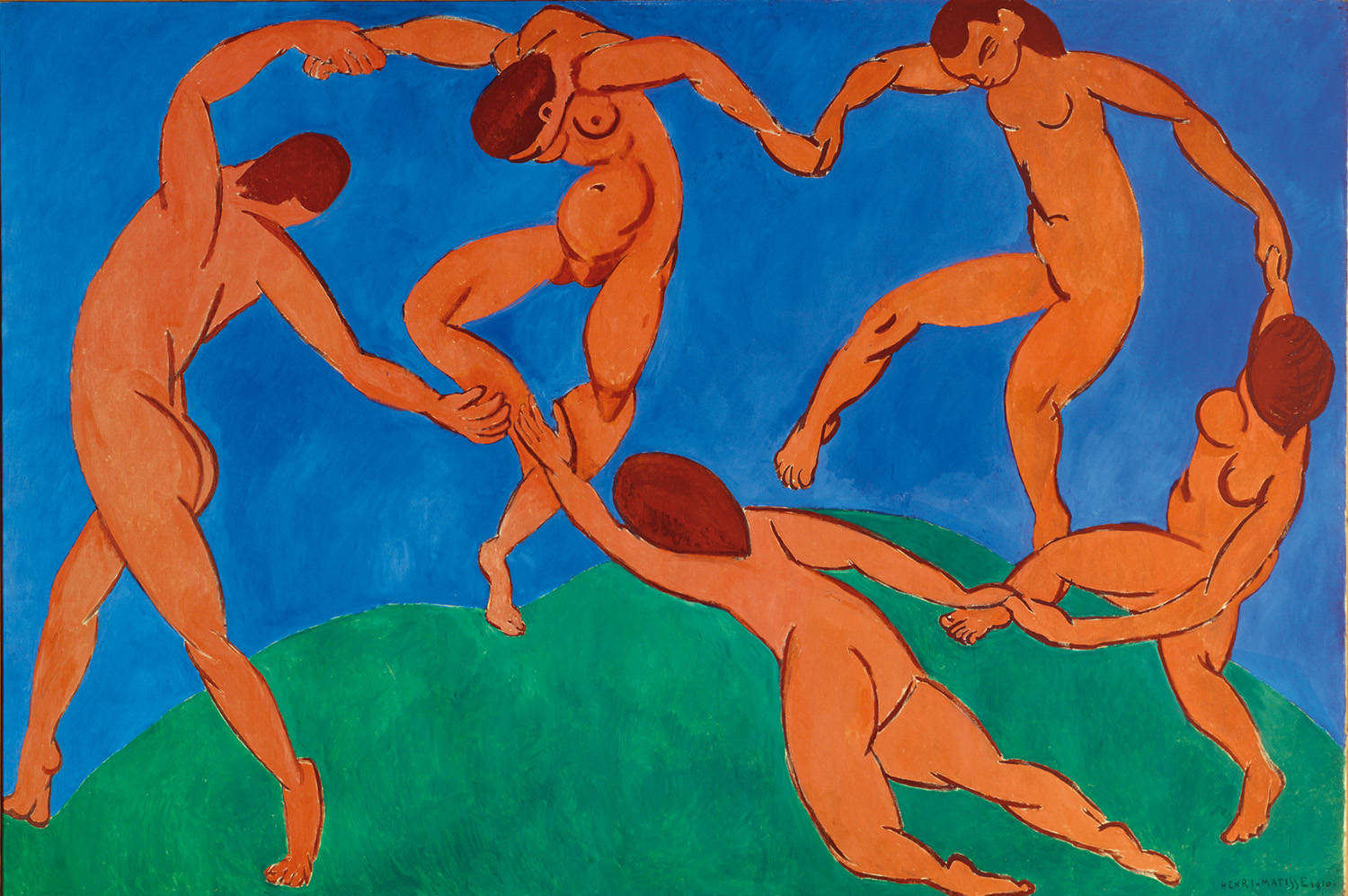
During my last visit to New York, I had the chance to wander through the exhibit Matisse: In Search of True Painting at the Metropolitan Museum of Art. I have always been inspired by the sensual, abundant work of Matisse.
As I walked through the exhibit, I began to wonder what his process as a painter could teach me about writing. If I am drawn to the way Matisse paints, what can his method and craft teach me about my own?
Matisse was often praised for the ease and fluidity of his art. In truth, painting was far from an easy process for him. He often reworked entire paintings many times over and used older works to generate new ideas. In later years, he hired a professional photographer to document his process so that he could analyze if he had gone off track or made progress with his work. He played with details, such as the curve of a woman’s back or her placement beside a stream.
I think that in writing terms, this is the beauty and sacred promise of editing. If I start to edit the first time I enter the blank page, I lose my flow. When I remind myself that it can always change and grow, that first inspiration is only one step on a very tall adventure, I believe that is the gem of Matisse and his process. After the initial impulse has been fully laid out, I can come back to rediscover and play with the structure and message it is meant to convey.
Craft is the act of honing an image, a word, a sentence, a movement until we have found something that shares an experience with others. To interrupt that first impulse with our own judgments is as negative and shortsighted as sending our work into the world completely unedited. Right in the middle of the two, there is the stuff creation is made of. Every time we touch and move a new piece, we are coming back in contact with something that is, in the very least, the wondrous collection of our own rich inner lives.
What Matisse taught me about writing is that I must allow myself time to be wrong. To be wrong as I first put words on the page. To make mistakes as I go through the editing process. To discover what happens when I change the pace or repeat a word or take something out. Matisse was so confident in this process of exploration he even paid to document his successes and failures with a professional photographer!
For all artists, the search for truth can be as inspiring as the first impulse and the finished work that bookend the making of a story.
Thanks to Matisse. He already said it so much better.


 Find Your Story