The Higg’s Boson, Cosmic Fire and Friendship

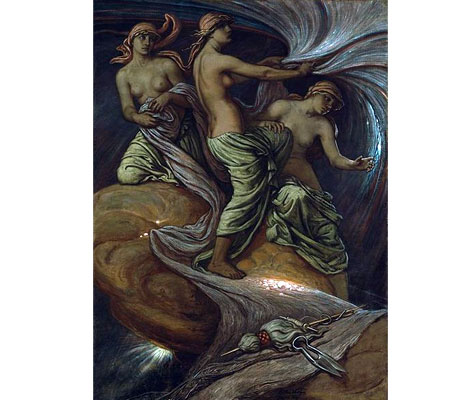
Fates Gathering the Stars by Elihu Vedder, 1887

World War II on the Eastern Front. Ice storms rage around Nazi troops as they press through a forest outside Leningrad. Nestled within this scene of bitter cold and the mounting tension of combat, Lake Ladoga waits still, pure and remarkably unfrozen in spite of temperatures that dip below freezing. Battle erupts, soldiers clash, and the forest bursts into a wildfire. Soviet horses escape their stable, leap through the flames and dive into Lake Ladoga.

The next day, Italian war correspondent Curzio Malaparte walks out onto Lake Ladoga and finds himself surrounded by macabre ice sculptures of dead horses in their final gesture as the lake instantly froze around them. Finnish soldiers play on the horses like toys until the ice cracks in April, and the final moments of the horses of Lake Ladoga disappear below the surface.

Curzio Malaparte wrote about the horses of Lake Ladoga in his autobiographical novel Kaputt. Decades later, Malaparte’s story was taken up by astrophysicist Hubert Reeves as an example of a “phase shift” in physics. Normally when water reaches the point of freezing, the molecules turn in on themselves and crystalize. Sometimes when water is very still and pure there is nothing for the crystal to attach to, and the water remains liquid. There is tension in this state though, because the cold is pressing all around, and any disturbance will create an instant shift from liquid to ice. In the case of Lake Ladoga, it was the horses that allowed this shift to happen. Hubert Reeves used the horses of Lake Ladoga as a cosmic analogy of the early state of the Universe when pure energy shifted to matter. In the case of the Universe, it was the Higg’s Boson that allowed this shift to happen.

Click here to watch an example of super cool water.

American filmmaker Walter Murch spends his spare time consuming science books but while on location in France, he found himself out of reading material. He wandered down to the local bookshop where he picked up the French book on cosmology by Hubert Reeves with the Lake Ladoga anecdote by Curzio Malaparte. Murch became so fascinated by Malaparte’s story that he translated his work into English. Murch published The Bird That Swallowed its Cage: The Selected Writings of Curzio Malaparte. Murch also went on to make a documentary on the search for the Higg’s Boson where Malaparte’s horses of Lake Ladoga was used again to illustrate the phase shift from pure energy to matter.

Click here for more on Murch, Malaparte and the documentary Particle Fever

It seems to me that the story of Malaparte and Murch is its own little universal shift. An Italian anecdote on the ravages of war waits to be used in a French book on cosmology. A French book on cosmology waits to be read by an American filmmaker. Walter Murch is inspired to translate the nonscientific work of an Italian writer by a French work of science. Walter Murch goes on to make a documentary on the search for the Higg’s Boson, one of the greatest scientific discoveries of the 21st Century.  There is the universe of the Universe, and then there is the universe of Nature, and then there are the universes of our own little, individual lives.

And like Lake Lagoda I have waited pure and still and tense with the potential for change.

What becomes of you when someone else happens along and dips their finger in your lake? A sudden shift from energy to matter…an idea turned to a story or a song or a work of art or a class you always wanted to take but never had the guts….

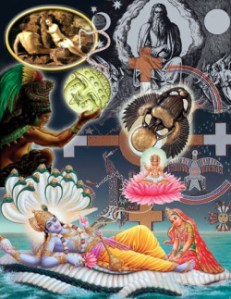
Ekpyrosis, a word of ancient Greek origin. Defined as “conversion into fire.” The destruction that will convert the cosmos to re-creation. And from this ancient Greek word was named the ecpyrotic model of the Universe, the theory that the Universe did not start out as a singularity, but as a collision of two three dimensional worlds.

And here is where my musings will completely destroy the hard work of physics.

In my imagination, we are all our own little worlds. Connected by a string, we are spread like a necklace through the darkness. Every now and then “someone” or “something” shakes the string. We collide unexpectedly (though perhaps fatefully) with another world, another person. A whole new universe is created from the collision of two bodies. We could call it ekpyrotic friendship, this shift that allows it to happen.

My physics may be faulty, but my intentions are true. The best things in life are born from the fire of ekpyrotic friendship. Thank the Universe for them.

…or I would be a lake pure and still but without a story to tell.

Part One: The Story of the Birth of the King of Pirates

The midwife hurried through a cold, foggy night. She came with an empty stomach, because a family who lived in the sailors’ district could hardly be expected to offer more than dinner as payment. She would roll her eyes, say she could think better with food in her belly, and food she would get. It was always better when there were already children in the house with older girls who could tend to a good meal, but it would have to do.
It will have to do, she mumbled to herself as she knocked at the door. A woman’s shrill cry cut the thick air. The midwife pushed the door open. It looked like dinner would have to wait.
An old sailor, sea-battered and red faced, held his young wife around the shoulders. He wore a red coat and she was in a white nightgown. It seemed to the midwife more like a murder scene than a birth.
“What are you doing to that poor girl,” the midwife cried.
“She will not stay in the bed. She says she wants to have the baby in the waves.”
The midwife looked out the tiny cottage window. Beyond were the cliffs, and the sea below. None of that could be seen through the fog. The midwife shook her head. “She will catch her death down there. And people would talk.”
The young woman moaned.
“Don’t worry love,” said the midwife. She stepped forward into the firelight. The mother to be was hardly more than a child. “We will not take you to the sea,” she whispered to the girl, “but there cannot be anything wrong with bringing a bit of the sea to you.” She turned to the husband. “Take a bucket down to the beach and fill it with water.”
“She will flee if I let her go.”
“She will die if she tries to fight you and birth at the same time.” The midwife looked the girl in the eye. “Will you stay if we bring you a bit of the sea?” The girl’s shoulders sagged. She nodded once, very slowly.
It was not the way things were done, the midwife thought, but if it settled the mother and gave the husband something to do…what could it hurt?
What could it hurt?
It was a quick and easy birth after that. The mother delivered a beautiful baby boy with jet black hair.
“He looks just like you,” the midwife cooed as she laid the babe on his mother’s chest.
“That is what I was afraid of.” The mother sighed.
“You are young, with a good birth and a healthy baby. There is nothing in the world to be afraid of.”
The mother sighed again.
The midwife sent the husband out to register the new child at the church while she tidied the room and waited for the afterbirth. She waited and waited, but nothing came.
“Maybe he is human after all,” the new mother murmured as she stroked the baby’s cheek.
“Of course he is a human baby,” the midwife tisked. A tired new mother might say strange things now and then, the midwife assured herself.
The mother jerked forward. The baby cried. The midwife took up the mess.
Except it was not a mess at all. It was a skin, soft and sleek and as silver as the moon. This was not right. Not right at all. The midwife took it to the fire. It was an unnatural thing, and it would be better to destroy it. She threw it on top of the flames.
“It cannot be destroyed,” the mother groaned from the bed. “Take it out with the tongs and drop it in the bucket of sea water. When you leave here, take it with you. Throw it over the cliffs, out into the waves.”
The midwife stood her ground. She crossed her arms and left the thing in the flames, but the mother was right, it did not catch fire.
“You should do as I say.” The mother’s voice was stronger this time, and carried an authority that belied her years. “There will be bad luck if you do not, for you and for your men. There are unseen things out beyond the waves that can take the fish from the nets. They can empty the cages. You do not want to be responsible.”
Oh, how the midwife wished she had never come to that house. She did not want their dinner. She did not want anything to do with these otherworldly things. Things one heard about in whispers. Things that lurked in fog and foam. She pulled the mass of silver from the flames, dropped it in the bucket and ran to the cliffs as fast as she could. She flung it far into the water. She made the sign of the cross. She made the pagan sign against the evil eye, the one her grandmother used to make. She tried to remove the notion from her mind of that beautiful baby boy with the jet black hair.
The next morning the fog lifted. It was unusually bright and sunny. The midwife looked out her window. She saw the husband in his bright, red coat walk down to the docks. He stepped onto a ship. He wore something strapped to his back. That something was topped with a tuft of jet black hair. The mother was nowhere to be seen.
Again, the midwife could not stop thinking of that boy. He would need praying for, if anyone ever did. The midwife went to the church and asked the priest to open the large dusty ledger that recorded all births and deaths. She told him to point to the name he had added the day before, and then to read that name. The priest lifted his thick finger from the spot. He read the name.
“Samuel.”

What Matisse Taught Me About Writing

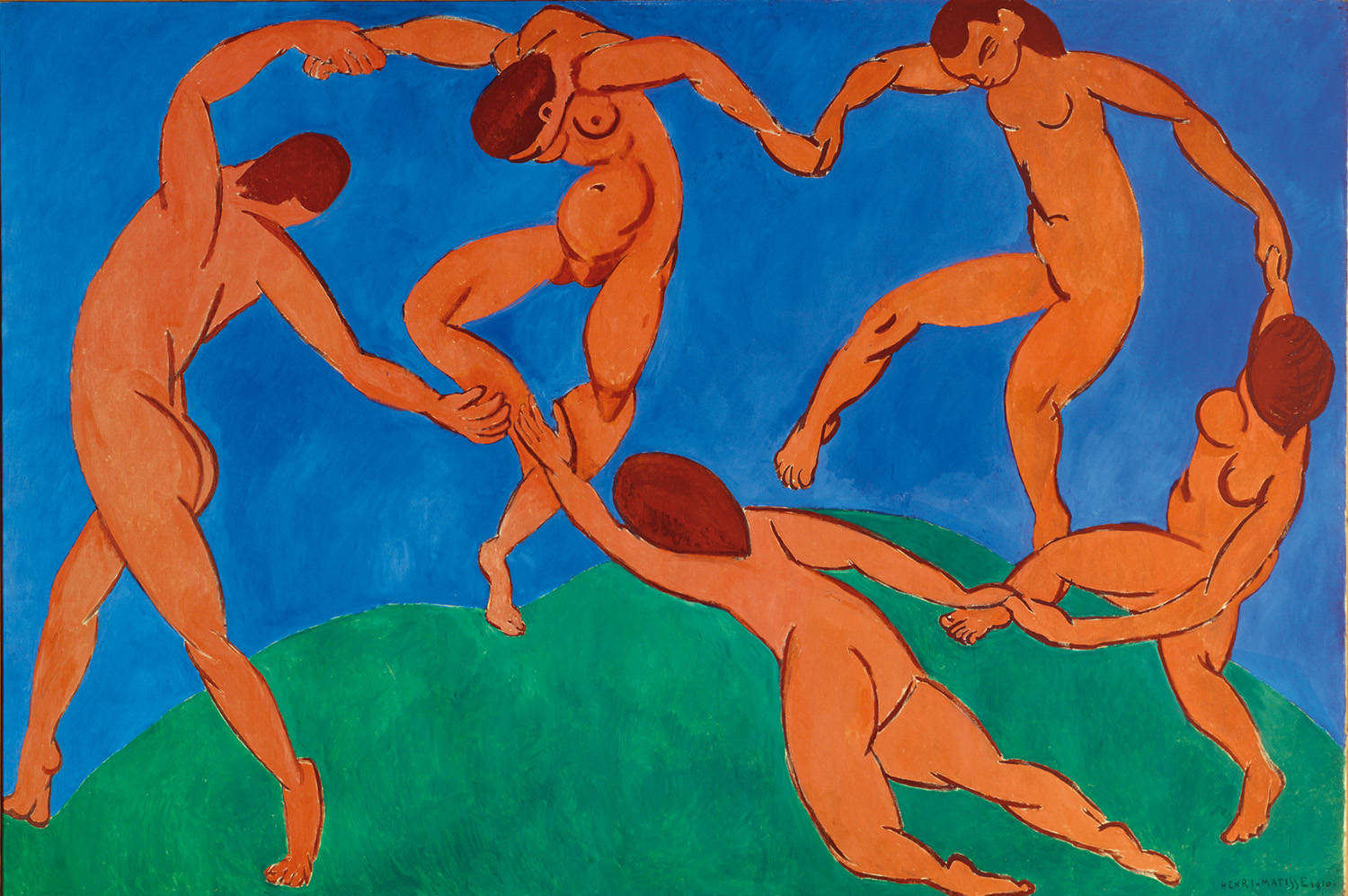
The Dance by Henri Matisse


During my last visit to New York, I had the chance to wander through the exhibit Matisse: In Search of True Painting at the Metropolitan Museum of Art. I have always been inspired by the sensual, abundant work of Matisse.

As I walked through the exhibit, I began to wonder what his process as a painter could teach me about writing. If I am drawn to the way Matisse paints, what can his method and craft teach me about my own?

Matisse was often praised for the ease and fluidity of his art. In truth, painting was far from an easy process for him. He often reworked entire paintings many times over and used older works to generate new ideas. In later years, he hired a professional photographer to document his process so that he could analyze if he had gone off track or made progress with his work. He played with details, such as the curve of a woman’s back or her placement beside a stream.

I think that in writing terms, this is the beauty and sacred promise of editing. If I start to edit the first time I enter the blank page, I lose my flow. When I remind myself that it can always change and grow, that first inspiration is only one step on a very tall adventure, I believe that is the gem of Matisse and his process. After the initial impulse has been fully laid out, I can come back to rediscover and play with the structure and message it is meant to convey.

Craft is the act of honing an image, a word, a sentence, a movement until we have found something that shares an experience with others. To interrupt that first impulse with our own judgments is as negative and shortsighted as sending our work into the world completely unedited. Right in the middle of the two, there is the stuff creation is made of. Every time we touch and move a new piece, we are coming back in contact with something that is, in the very least, the wondrous collection of our own rich inner lives.

What Matisse taught me about writing is that I must allow myself time to be wrong. To be wrong as I first put words on the page. To make mistakes as I go through the editing process. To discover what happens when I change the pace or repeat a word or take something out. Matisse was so confident in this process of exploration he even paid to document his successes and failures with a professional photographer!

For all artists, the search for truth can be as inspiring as the first impulse and the finished work that bookend the making of a story.

Thanks to Matisse. He already said it so much better.

This City

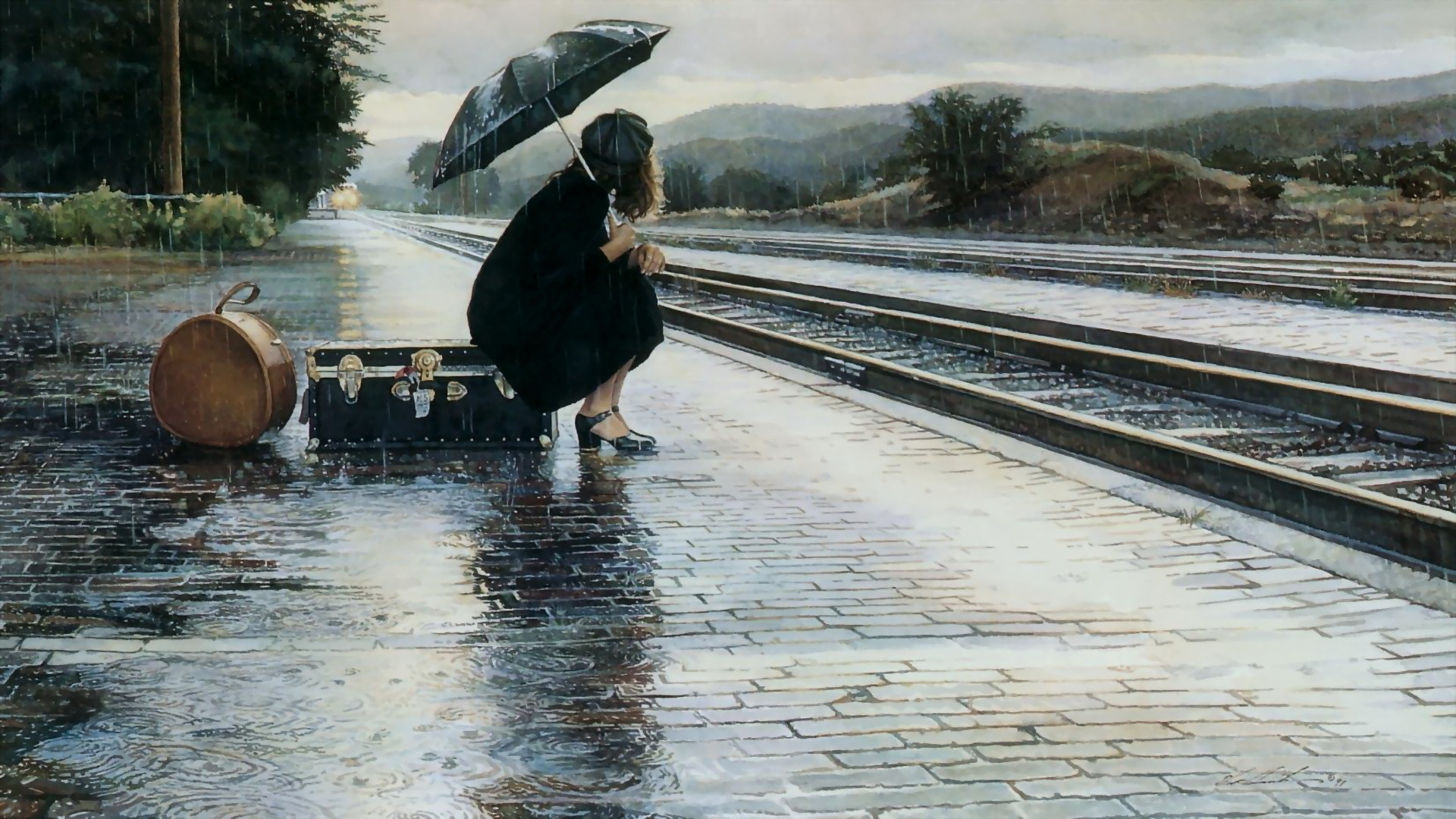
girl-woman-rain-umbrella-train-railway-station-platform-suitcase

I took your city to bed
Under a rain soft and bitter
Her streets wet
Her buildings part for me to enter
I know you found her first
But now I walk inside her too
Now I make wishes on her stones

She wrote him a letter
With library pencil and blue lined paper
They parted at the corner
She made wishes on his stones
He threw away her seashells
When he thought she wasn’t looking
Wait, she whispered
Look, she cried
He drown in a street of umbrellas
Like a river dark and cold

I woke before dawn
Watched her colors spread across the sky
Red and gold and violet as the fire inside me
Wake up, I whispered
Look, I cried
But no one answered
I always sleep alone

Meet me on the steps, she whispered
Meet me where you kissed me, she cried
She chased the colors he once wore
Tapped the shoulders of a thousand men
A thousand strangers
None were him
She walked home alone
Under a rain soft and bitter

Stop someday in the place I stood
To watch umbrellas weave from sight
Like a river dark and cold
To pick out the colors I once wore
In the street signs
And brake lights
The smile of a cab driver

The train shudders
Comes to rest beside white tile
The valiant flicker of electric lights
He leaves his umbrella on an empty seat
Wait, she whispers
Come back, she cries
But the doors close
The train weaves from sight
Like a river dark and cold

When I have stolen your city
You will see my colors spread across her sky
Her streets wet
Her buildings part when you enter
You will burn with red and gold and violet
Meet me on the steps, you whisper
Meet me where you kissed me, you cry
But too late
This city has granted your wish
You walk alone
Under a rain soft and bitter

Perfect Pitch

bloggerBadge

A few weeks ago, I signed up with WriteOnCon to work on the pitch for my young adult novel. It’s got me musing…what is the perfect pitch?

Perfect pitch. I am not a musician, so maybe I am about to make a statement that is too simplistic. I believe in music, perfect pitch is the ability to hear a note and name it, or sing a note without hearing it first. In other words, perfect pitch is the ability to pull a sound from the cacophony of noise and define it.

As I learn about the process of pitching a novel, I see it no differently in novel writing than in music. The perfect pitch is one that pulls that one kernel of truth and order from all the noise so that an author can say this is what my story is. Go ahead and love it as much as I do.

“One choice can transform you—or it can destroy you.” -Insurgent, by Veronica Roth

One sentence to define the truth of a 525 page book.

To stick with musical themes, as I skimmed through the backs of books in an attempt to understand what sells me as a reader, I discovered it is that moment of dissonance. The promise that careful order is about to fall apart. The characters I am about to meet are going to rub up against their world, sparks will fly, and from the ashes the author will unveil a glorious note.

“Tom and Isabel return to the mainland and are reminded that there are other people in the world. Their choice has devastated one of them.” – The Light Between Oceans, by M. L. Stedman

I am sold by pitches where the characters move quickly out of their stereotyped roles, where their world is about to become dangerous, out of order, uncomfortable.

“Stifled by the monotony and restrictions of his boarding school on the coast of England, sixteen-year-old H has a chance encounter on the beach with a beautiful boy named Finn, who lives alone in a fisherman’s hut by the sea.” – What I Was, By Meg Rosoff

Where stereotyped plots, such as forbidden love, not only raise the stakes but are used to guide us to that kernel of truth, that glorious note.

“David Power and Clare O’Brien both grew up dreaming of escape from the battered seaside town of Castlebay, but they might as well have the ocean between them. David is the cherished son of a prosperous doctor, while Clare lives with her large family behind their faltering store, longing for a moment of quiet to study. When they both go to university in Dublin—he as a matter of course, she on a hard-won scholarship—their worlds collide. They find freedom in each other—until families, lovers and secrets they left in Castebay come back to haunt them…” – Echoes, by Maeve Binchy

These are characters I know. I’ve meet their type before. Rich boy with everything in the world going for him. Poor girl from the wrong side of the tracks but with big dreams. What sets them apart isn’t that their families don’t approve, it’s the promise that they will never fully shed the lives they left behind. That is the kernel of truth, the perfect pitch, the solitary note that Maeve Binchy has pulled from the noise of ill-fated love stories. If I hadn’t seen that on the back of the book, I never would have opened it up to read it. I wouldn’t have known where it might take me.

The books I put pack on the shelf have a pitch in the flap that never moves beyond basic character constructs and plot points. Here is a made up, chicken soup version of what makes me go “meh…”

“Beautiful Sandra is head cheerleader and self-appointed leader of the “it” crowd. That is, until she fails history. Now she has to be tutored by friendless nerd Bobby. But the more Sandra knows about Bobby, the more she likes him. Can she face her friends with a public relationship?”

To my mind, this pitch has all the plot points without the kernel of truth. I’ve seen my fair share of after school specials that cover that theme, and I’ve already read every Sweet Valley High. What makes Sandra and Bobby’s story different from all the others? What do Sandra and Bobby learn from one another? How do they grow in a way that makes them unique?

It would be no different if I were to walk up to Sandra and ask, “Who are you?” and she answered, “Oh, I’m head cheerleader and front man for the “It” crowd.”  I know a million of such Sandras. But if she said, “I’m Sandra. I really want to love deep and hard and real. I’m willing to sacrifice everything I have for love, and if in the end I find myself alone, well, at least I tried, right?” Now I might stop to listen because Sandra has flaws and strengths and room to grow.

Like music, a perfect pitch takes time, training and craft, but when it’s right you can feel it in your bones. As always, I’m so glad I signed up for WriteOnCon to work on my pitch with other authors. To me, the most perfect pitch is one I don’t have to write alone. The ability to find kindred spirits and work on craft with others is an invaluable tool. Writing might be solitary, but writing is meant to be read. It can’t be read tucked away in a file on your desktop. So get out and share.

Good luck to everyone entering the WritOnCon Pitch Fest! If you haven’t thought of it yet, click here to learn more.

All the best in your writing.

In Defense of the Muse

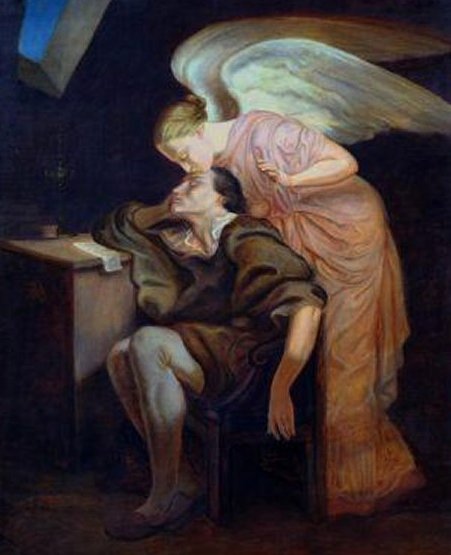
The Kiss of the Muse by Paul Cezanne


A few days ago, Freshly Pressed shared a fantastic post by a writer named L.C. Spoering which began “let’s talk about muses…Or not. Because that’s just stupid.”

You can read it here.

I read her post several times, not only for the topic, but the quality of the prose. How I wish I could write so concisely. I can’t. And I’m here today to do the stupid. I am here to defend the muse.

The concept of the muse and what it means to art (and storytelling in particular) is one of the most important conversations we can have about how the craft of creating stories has been passed down to us through the ages.  We should be careful not to throw the muse out with the proverbial bathwater just because we believe ourselves more logical than our forefathers. What would we be without the historical significance the muse has had on the act of making stories?  We would have no Odyssey, no Divine Comedy, no Annie Hall. Not to be biased against my own sex, Virginia Woolf fought this erotic but safely heterosexual bond between poet and muse. She denounced women who wished to write being told they must have male muses to torment and intimidate them. She called instead for female writers to look back to the women who mothered them both in life and literature.

In my defense of the muse (and therefor inspiration) and the inextricable link to the craft of telling stories, I venture to disagree even with Virginia Woolf. The muse is sexless sex. The muse turns you on by being everything you never knew you wanted. The muse strips you down, forces you to stand naked and makes you write your own shame into a story you started working on because you think you like dogs.  The muse knows the best words you will ever string together are the ones you hope your mother and your ex never read. The muse never touches any artist who sits and waits for inspiration to strike. The muse only uses pack animals unafraid to strap all the luggage on their backs and show up to climb the mountain every day. The muse is the path and the guide to the top, where you either find a majestic view or another mountain to climb.

In other words, I would argue that it isn’t inspiration VERSUS sit down and work. It’s sit down and work FOR inspiration. The second will never happen without the first.

Is it divine? No, not the wear your Sunday best kind of divine. It is the zone of an athlete, the Ole of a dancer, the intuition of a mother. It is Lois Lowry transforming her father’s dementia into The Giver, Dante expressing unrequited love in The Inferno, Shakespeare having the audacity to invent words we now take for granted because he saw what others did not…that there was a way to say it better.

I was once at a writing conference and the prolific Jane Yolen was stationed at the table next to me. A young author lamented that she was afraid to think outside the analogy box because she wasn’t sure she was as yet artistically worthy of knowing when she had gone too far.

“That’s the imposter complex,” Jane Yolen responded. “We all have it. If I’d listened to mine, I’d never have likened snow to a bowl of milk in Owl Moon.”

The muse is not a waifish, half clad woman who whimsically whispers creativity into the ears of worthy men, but if it helps you to see it that way, if it needs to be personified for you to get to work, have at it! The muse is a psychological safety net beneath our sense of self when we step into our imaginations. It is a way to navigate the mental chatter of our own brains. The chatter that hisses, “Imposter, how could you write that? How dare you?”

The act of stringing words together in a way that shifts a world from our own heads into someone else’s is a very, very hard job. It can feel like a sacrifice at the altar of all we consider sane in modern western society. Internationally bestselling author Elizabeth Gilbert has pointed out that creating stories has killed some of our most talented minds. We should look at that, and we should not be ok with it. Ms. Gilbert sees the muse as a “psychological construct…a safe distance between me as I am writing and my very natural anxiety about what the reaction to that writing is going to be…”

Is it dangerous to see the process of creating something out of nothing as evolved and elevated? Hell yes! People don’t open books to immerse their minds in someone else’s safely lived life. May it always be dangerous. Destructive to the status quo. A revolution against the easy and complacent. That is the job of writing. But may it not be destructive to you the pack animal who toiled away day in and day out for one glimpse of the view. May the muse wait at the door, and hang onto your wild, gypsy self when it is time to return to the real world where the dishes did not get done and your family will be eating sandwiches for dinner the third day in a row because you lost track of the time.

Inspiration is not a religious experience. It is the grail within the quest. Sit down and write every day is the religious experience. It requires faith that this time spent trying to share something that only exists inside of us…the toil and the doubt and the rejection and the perseverance…somehow it will matter. We are not the guy who sent the flood, but we are the guy who smelled rain and built the boat.

I leave you with one more quote by Elizabeth Gilbert:

“So I just lifted my face up from the manuscript and I directed my comments to an empty corner of the room. And I said aloud, ‘Listen you, thing, you and I both know that if this book isn’t brilliant that is not entirely my fault, right? Because you can see that I am putting everything I have into this, I don’t have any more than this. So if you want it to be better, then you’ve got to show up and do your part of the deal. OK? But if you don’t do that, you know what, the hell with it. I’m going to keep writing anyway because that’s my job. And I would please like the record to reflect today that I showed up for my part of the job.”

All the best to you in your silent toil. All the best to your inspiration. Now sit down and write.

Watch Elizabeth Gilbert: your elusive, creative genius on TED 


The Center for Fiction

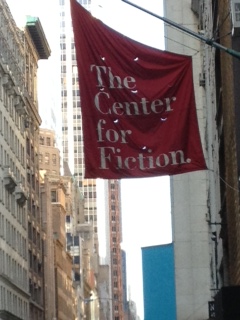
The Center for Fiction 17 East 47 Street, New York, NY

On my last day in New York City, I decided to make a pilgrimage to a bookstore I visited last year. I walked until my feet were blistered, but I could not retrace my steps back to that little bit of nostalgia. I wandered off in a different direction instead. It started to rain. The wind pressed against me, but I’m not one to let weather ruin a chance to wander through any city.

I’m glad I didn’t give up.

Nestled amongst a nondescript row of office buildings, a burgundy banner waved in the wind heralding  The Center for Fiction, located at 17 East 47 Street. Whether you are a writer or passionate about the written word, here is a warm and welcoming place for all lovers of story.

I was wet and cold and the word fiction makes my heart beat faster. The combination of warmth and a center dedicated to my favorite word was more than I could resist. I was not disappointed. The Center for Fiction is not large, but it manages to be at once a library, a bookstore, a quiet space for authors to work, and a location of great literary events. So good to find a little corner of the world still celebrating, maintaining and supporting the advancement of the art of telling stories.

The Center for Fiction

The staff was very friendly. The girl working behind the desk chatted with me for a long time about their section dedicated to translations of European authors who are still relatively unknown, at least in the States (and most especially to me). I ended up walking away with a lovely gem of a book, The Twin by Gerbrand Bakker. I might never have discovered such a good read on my own. That in itself was worth getting lost in the rain, but I also managed to walk away with a pile of used books that came to a total of $10.

The Center for Fiction is open to the public, but it is also one of the few membership libraries still in operation in the United States. The benefits of membership include attendance at events with free or discount admission, reading discussion groups, access to their lending library of over 85,000 titles as well as discounts at their bookstore. Above all, membership supports an independent, not for profit organization dedicated to keeping the written word alive and well.

If you find yourself in mid-town Manhattan, leave your friends at the souvenir shop and stop by The Center for Fiction for a gift of good books and memories that are just as much a part of the city as another tiny replica of the Empire State Building (and yes, I bought my children tiny replicas of the Empire State Building too).

For more information on The Center for Fiction, visit their website: www.centerforfiction.org

The Old Italian Woman

The Old Italian Woman, Edgar Degas, 1857

What became these days
Here behind frosted glass
Here where patience still won’t answer
And my children echo on yellow walls
This living down to threadbare rugs
This hope to tease despair
To turn a longing into song
There was the smell of sun warmed grass
There was a drink of sea worn tears
The flavor of a kiss I never tasted
Those broken words
Those nightingales turned to larks
Old letters turned to an old man’s scars
What stumbling
What chance breath
Became these days


Angie Flanagan

The Annual Society of Children’s Book Writers and Illustrators Winter Conference in New York

Image

The day before I left home for the SCBWI Winter Conference, I was touched by a little bit of literary magic. Finding myself with a free afternoon, I went to browse my favorite little bookstore. On one of the shelves, What I Was by Meg Rosoff caught my eye. I didn’t know much about this book, but the quality of the prose caught me immediately. So I bought it.

My actual voyage to New York happened in fits of flights and delays and hours waiting on cold, dark tarmacs. I doubt anyone has had a more dehumanizing, bumpy, travel sick trip to New York since my peasant ancestors landed on Ellis Island by tall ship.

When I finally settled in at the hotel, I opened up my conference schedule and discovered that one of the main speakers at the Friday Novel Intensive was none other than Meg Rosoff. This was the moment I took to be a spark literary magic, a bit of serendipity, a promise that the long haul to get there would soon be rewarded. I was not disappointed.

If you love the writing, telling or reading of stories and you ever have the chance to hear Meg Rosoff speak, do not miss it. She is brilliant, warm and giving. She spoke about the challenges of plot. It might seem obvious that if three people were given the same plot and asked to write about it, three very different stories would emerge from the assignment. What Meg got me thinking about more deeply is that I am, at heart, all of my characters. Not just the obvious protagonist. The other supporting characters, the ones I think are based on the girl I hated in third grade or the boy I loved at twenty are all my projections of myself. My unique experiences. That’s my plot. As I write it now, it sounds more Freudian than when Meg Rosoff was speaking. Read her books. Read about her. She is an inspiration.

“What is the difference between an artist and a craftsman?” Mo Willems asked during his closing keynote address. I think this question sums up the lessons on craft that I took with me from the conference this year. Mathew Kirby planting the seed of inciting events both internally and externally, coming to a climax and then meeting to find resolution. Margaret Peterson Haddix shaping and reshaping a story through research. And of course, the legendary Jane Yolen with her infectious joy of language.  She not only opened up my understanding of landscape as a living, breathing character, but how it can be molded and shaped to affect the rhythm, texture and emotion of my stories.

The highlights of my weekend were Shaun Tan and 2002 Newberry Award Winner Linda Sue Park. Both of these authors tell stories lyrically but concisely, and in the case of Shaun Tan with hardly any words at all. Shaun Tan weaves images of ordinary life into the surreal. His pages are full of pictures, but he makes it as simple as possible so the reader can take their own journey. Linda Sue Park uses nouns sparingly and makes certain that they are woven throughout her story, never appearing just once.

I’ve come home revitalized and ready to write, as I always do from SCBWI events. This organization has brought such value to my work. To learn more about the SCBWI, visit their website: http://www.scbwi.org/

Write it Down

Write it Down 2

It was a hot New York City summer. I was living in a tiny little box of a place while I studied at the Martha Graham School of Contemporary Dance. I didn’t live close to the school, but I still walked everyday to save myself money and soak up everything New York had to offer. On my way home, I usually wandered through Central Park or went to a museum. I was growing, filled with art and music and of course all of the wonderful ideas of Martha Graham (she had just died, but her spirit was alive and well).

I didn’t go back to my little room until after the sun went down when I knew it would be cooler. I stretched on top of the covers, my body all used up from a day of dancing and walking, and read Joseph Campbell. I fell asleep happy and exhausted.

One night, I had a dream that a red headed goddess came up to me in Central Park and asked if I would like to see what is behind the Collective Unconscious. Yes! Of course I did!

She pulled back a curtain, and off we went into the back of a theater. It was full of pictures, movement, words, entire stories. A world that connected every idea together. The red haired goddess turned to me.

“Now go write it down,” she said.

I pulled myself from sleep and fumbled in the dark room for my notebook and pen.

“Write it down. Write it down. Write it down.” I said to myself. I scratched away on to the paper, barely awake, my eyes still closed. I shut my notebook, dropped my pen and fell back into bed.

When I woke in the morning, I couldn’t remember the details of my dream, but I did remember what the red haired goddess had said to me. I rushed to my desk and flipped through my notebook. What great work of genius had been handed to me while I slept? I turned the page, and there it was, right in front of me, penned in my very own hand….

“Write it down.”

Blog at WordPress.com.

Up ↑