
The Artist no. 3

Angie Flanagan


Grandmother knelt in front of her loom by the fire. Her fingers danced across the strings like a harpist. A beautiful pattern grew into a tapestry from nothing more than the tidy balls of colorful yarn beside her. She came to the end of a white strand and worked in a thread of black until I couldn’t see where one began and the other ended.
A log caved in two, and the orange flames of the fire leapt higher. The light caught the age marks of my grandmother’s hands. I turned away to look out the window. Was my life destined to be like her life…endless work until I was too old to wonder anymore?
Her house perched on the ridge of a mountain as solitary and stubborn as she was. Only the moon could climb higher than grandmother’s house, and that night it hung silver and round and pregnant with possibilities. Below the window was a thick forest of evergreen trees and beyond that a bog. The bog was usually wrapped in a thick mist, but that night everything was clear. The land lay barren and unprotected, vulnerable as a secret in an open palm. I thought if I were a decent sort of person I’d look away, but I couldn’t.
On that night, in that brazen circle of moonlight, a woman appeared from the forest and into the bog with her hair wild and silver in the wind. Two wolves loped behind her. One was white and the other black. If they followed her or chased her, I couldn’t tell. The wolves stopped at the edge of the tree line and took up a fight. The woman dropped to her hands and knees and clawed the dark earth with the her bare hands. The wolves rolled and bit until they fell into the bog in a patch of black and white as seamless as grandmother’s weaving. The woman took no notice. She left the hole she’d dug and crawled forward to start another.
“Who is she?” I whispered.
“Ach,” Grandmother kept her weaving in and out in steady rhythm. “The moon is full and you’ve grown old enough to see the world as it truly is. I’ll wager you’ve caught your first glimpse of the bog woman.”
“Where does she come from?”
The wind moaned. The wolves howled. I felt the chill of the night move across my skin.
Grandmother took a ball of yarn from floor and weighed it in her withered hand. The yarn was as dark and rich as the peat soil of the bog. “That answer is buried in the past, all the way down to the first women who ever lived and loved and wished she was better than she’d been.”
“What is she doing?” I asked.
Grandmother cut her dark yarn and took up a line of red.“Long ago, my grandmother told me the bog woman used to meet a man out there at the edge of the forest. It has always been a clandestine spot. When he was young, that man had found a bag of gold on a bench in the courtyard of the market. It had a name on it, but instead of finding the owner, he concealed it in his pocket. On his way home, he saw the hat maker. A hat! He’d never bought a hat before. He’d never needed one.
“The thrill of the purchase made the trees greener, the sky bluer. For a moment in time, he was full of a power he’d never known before. He told the hat maker that his father had sent him to pick it out, because he would need it for a journey they would take together. He wasn’t going anywhere with his father, of course. In fact, the hat would never be any use to him at all. If he ever wore it, his parents would know he hadn’t come by it honestly. When he got home, he hid it under his bed.
“That silly, stolen hat tormented him. Every time there was a knock at the door, he was sure it was the owner of the gold come to tell his parents what he’d done. The shame of his parents knowing his wrong doing frightened him where the theft had not. He buried the hat and the empty bag in the bog like dead men. Even when it was lost in the earth, he feared the owner of the bag would find him and give him away. He’d not minded being a thief, but he couldn’t stand to be known as one.”
Grandmother ran the shuttle through her tapestry. “Of course one day the man left the woman in the bog too. He married a wealthy girl and never returned, but a stolen heart can’t be left behind as easily as a hat. Whatever became of the man, I’m sure he met his fate. The woman stayed in the bog ever since, digging for the lost burdens of someone else’s shame. While she digs, her wolves fight untended.”
“Are those wolves good or evil?” I asked. They both looked wild and dangerous.
“Neither. Everyone lives with their own two wolves, but the rest of us keep them hidden inside. One wolf is called Forgiveness.The other is Fear. Our wolves must fight to the death.”
The woman was bent and old and desperate, but I still saw the beauty in her. If she could find solace from such a battle, certainly I could too.
“Which wolf will win?” I asked.
“That’s her choice. “Grandmother tied a knot at the end of her work. “It will depend on which wolf she feeds.”


She will live to fall again
In a leap across the cracks
To greener pastures
(or a dance along the edge)
Over nowhere places
Lost in time spaces
She will fall
From the apple tree
laughing
From grace
singing
For him
believing
The ground she fears
The end she knows
Worse if she holds on
To the memories
laughing
With regret
singing
In emptiness
believing
One last leap
Her footing lost
Balance gained
To catch herself
Cracked open
Not broken
Resurrected
She will live
Let her fall

There is a secret garden
Dangerous and unexpected
Strange and wild
I found while falling
Rain-like in the summer heat
Tiptoe over the tiny heartbreaks
Through the empty and the lush
Do I possess it in my head?
It might have been my heart
The heart is fragile
But you have to keep seeking
Keep asking for life
Tiptoe over the tiny heartbreaks
Let my mind hold it alive and warm
Coax it with the hand of memory
Not much
Never very much
Or I will need it in that desperate way
A drug chased too long
A talisman held too dear
And the holding is how it is most often lost
I press along the edges
Until it aches
Like testing a bruise
To find it still part of me
Dangerous and unexpected
Strange and wild
A secret garden

How he looked my way and I felt it
And yet he did not know me
And I could not find him
Try as I might
Behind the bricks he laid
In a mortar of busy jokes
And his lovely hands
And his shattered heart
But oh, he looked at me so well
And how across the room
I wanted to hold his hand
How I heard him speak to another
And wished it were to me he spoke
How he became a poem in my head
How he kissed me in the place above my dying heart
In the dark corner where no one else was looking
How his mouth slide warmth along my emptiness
And my soul whispered my god I might have loved him
If I hadn’t broken love to pieces
How painful it was to hold my soul captive
To pluck her song unsung from my mouth
When she only wished to set us free
But I knew the price my soul demanded
And tried to turn away
How I surrendered
And yet I could not find him
Try as I might
Behind the bricks he laid
In a mortar of busy jokes
And his lovely hands
And his shattered heart
But oh, he looked at me so well


Bob Dylan will turn 72 on Friday
My first exposure to the potential for beauty in words and stories came from Bob Dylan. When I was a girl, my mom was brave enough to let me listen to her record collection. I’d spread the albums out and sit cross legged on the floor in front of the record player. Dylan’s voice wailed through the tinny speakers, imploring his lady to lay across his big brass bed. While the five year old me had no idea why anyone would want to get in bed with someone with clean hands and dirty clothes, I felt the rare beauty of the invitation in each poetic phrase.
John Wesley Harding and Oh, Mercy were the soundtracks to my first “grown up” college romance (free of the constraints of curfews and porch lights that flashed when I lingered in a boy’s car too long). Discovering someone who wasn’t as old as my parents who loved Dylan too seemed fateful at the time. Oh, how young we were. A few years later, I walked in the door with my first broken heart, turned on the radio and Just Like a Woman was playing. That seemed like fate too (and oh, what a jerk he was).
Dylan constantly reinvents himself and his music, but I have also reinvented and rediscovered his music as I’ve grown up. From records to tapes to cds to Pandora, Bob Dylan has woven tales about heroes and saints and lovers and heaven and hell. I’ve held my breath, waiting for a well turned phrase or suddenly discovered some new question to ponder. What does it mean to be a hero or a criminal or a lover or a loser? Mysteries quiet or bold left to linger unseen in a nearby world, like the flowers in my neighbor’s garden.
In his autobiography, Dylan says he had a second artistic renaissance at 40 years old, and the same has happened for me. He talks about those secret moments of wondering if he was too old, of wishing he could have been twenty years younger, but doing it anyway. I know my own artistic impact is a thousand times smaller, but I can relate.
I haven’t got a clue who Dylan really is as a person, but an artist with over 60 years of creative passion is worth celebrating. Wake up every day and make it happen. Happy Birthday, Bob Dylan.

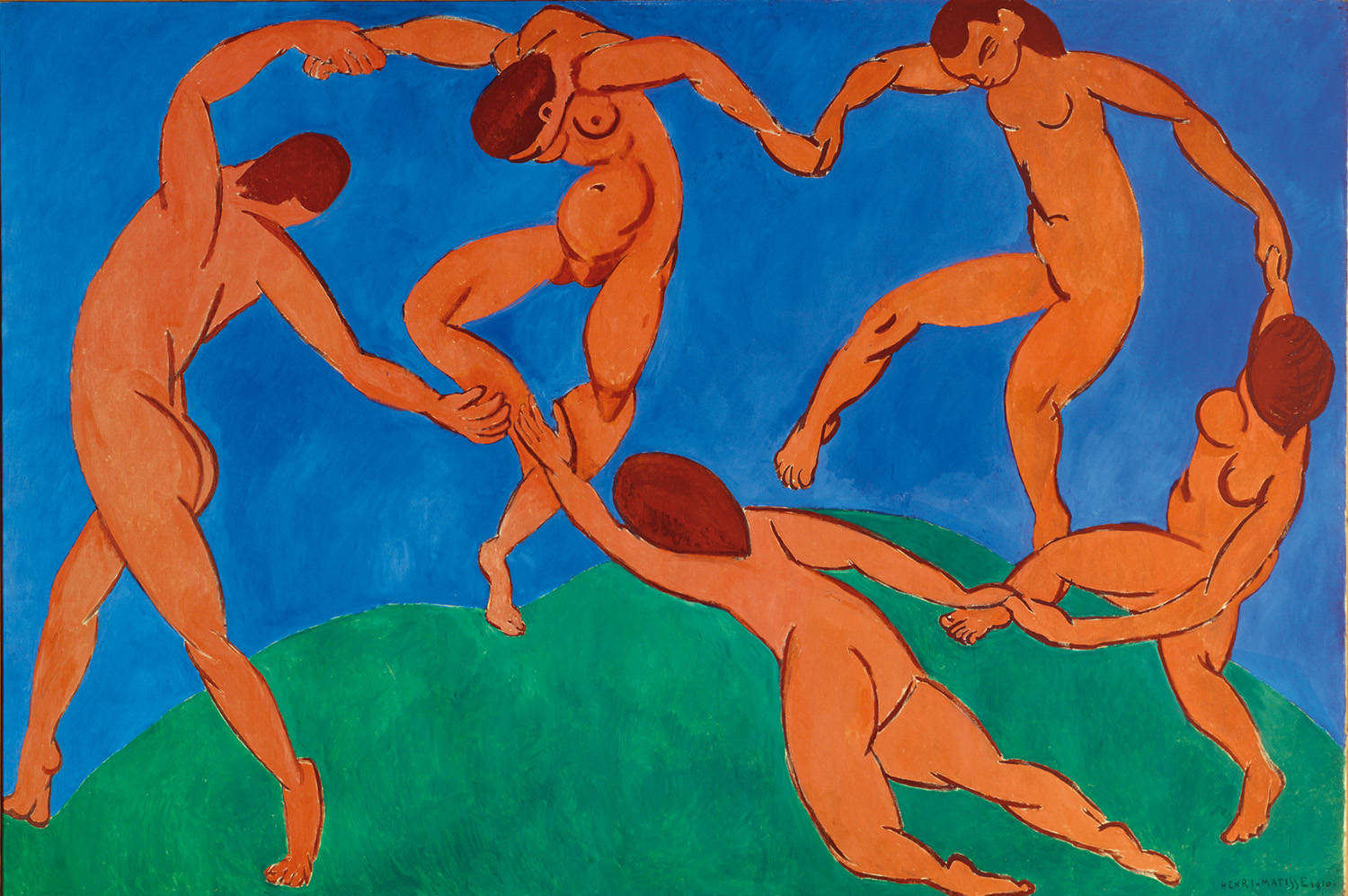
During my last visit to New York, I had the chance to wander through the exhibit Matisse: In Search of True Painting at the Metropolitan Museum of Art. I have always been inspired by the sensual, abundant work of Matisse.
As I walked through the exhibit, I began to wonder what his process as a painter could teach me about writing. If I am drawn to the way Matisse paints, what can his method and craft teach me about my own?
Matisse was often praised for the ease and fluidity of his art. In truth, painting was far from an easy process for him. He often reworked entire paintings many times over and used older works to generate new ideas. In later years, he hired a professional photographer to document his process so that he could analyze if he had gone off track or made progress with his work. He played with details, such as the curve of a woman’s back or her placement beside a stream.
I think that in writing terms, this is the beauty and sacred promise of editing. If I start to edit the first time I enter the blank page, I lose my flow. When I remind myself that it can always change and grow, that first inspiration is only one step on a very tall adventure, I believe that is the gem of Matisse and his process. After the initial impulse has been fully laid out, I can come back to rediscover and play with the structure and message it is meant to convey.
Craft is the act of honing an image, a word, a sentence, a movement until we have found something that shares an experience with others. To interrupt that first impulse with our own judgments is as negative and shortsighted as sending our work into the world completely unedited. Right in the middle of the two, there is the stuff creation is made of. Every time we touch and move a new piece, we are coming back in contact with something that is, in the very least, the wondrous collection of our own rich inner lives.
What Matisse taught me about writing is that I must allow myself time to be wrong. To be wrong as I first put words on the page. To make mistakes as I go through the editing process. To discover what happens when I change the pace or repeat a word or take something out. Matisse was so confident in this process of exploration he even paid to document his successes and failures with a professional photographer!
For all artists, the search for truth can be as inspiring as the first impulse and the finished work that bookend the making of a story.
Thanks to Matisse. He already said it so much better.


What became these days
Here behind frosted glass
Here where patience still won’t answer
And my children echo on yellow walls
This living down to threadbare rugs
This hope to tease despair
To turn a longing into song
There was the smell of sun warmed grass
There was a drink of sea worn tears
The flavor of a kiss I never tasted
Those broken words
Those nightingales turned to larks
Old letters turned to an old man’s scars
What stumbling
What chance breath
Became these days
Angie Flanagan


 Find Your Story