The Keeper’s House

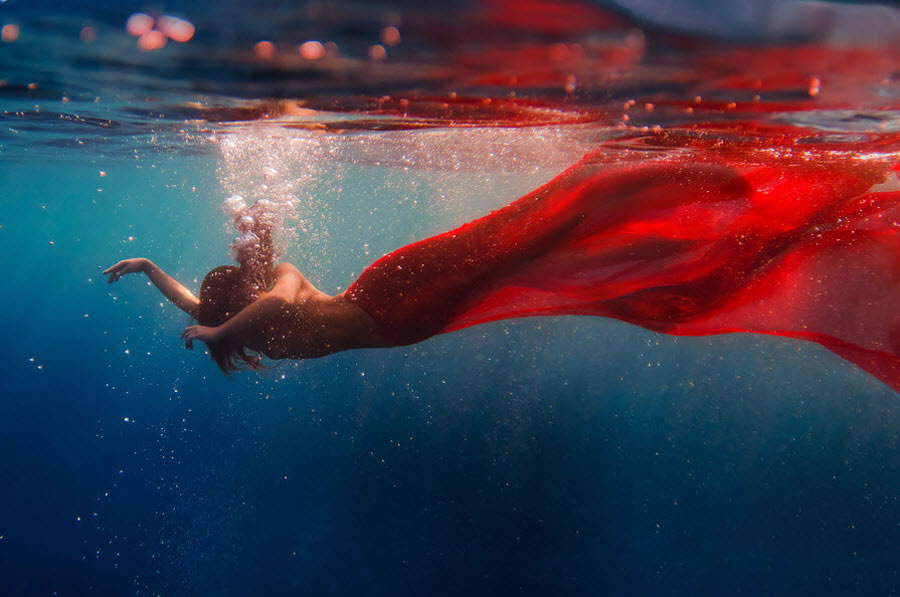
red mermaid

Chapter 1

The ocean inhaled. It rose toward a pale half moon that hung heavy and low in the dark sky. A line of foaming waves rolled back from the shore like a beckoning hand. The lighthouse pulsed in rhythmic beams of illumination.

One long.

Two short.

One long.

Smooth, wet sand sprang to life under the beacon’s ray. A small bit of white appeared, half buried in the distance. It winked at me in the light, and I sighed. Another of the ocean’s tiny temptations. There was no way to resist.

I ran toward it, and the hair on my neck stood upright, making me aware of the pull of the tide. I snatched the small white shell from the sand and held my breath. The wave rolled against me and soaked the edge of my nightgown. Same as always, salt water burned my skin. The burning hurt, but it also hummed with a pulsing temptation. My mind went out to the dark depths of the ocean, cold and terrifying.

It would steal me away.

Maybe I wanted it to.

I lifted the edge of my nightgown and ran back to the beach, splashing through the surf as fast as I could to the safety of dry land. The heaving ocean was pearlescent under the low moon and the beacon, glittering like a fairy world full of beauty and remorseless power. I loved it as much as I feared it.

The shell felt cool in my hand. I wiped a clump of sand from its center with the wet edge of my nightgown and held it to my ear. Da said that no matter how far a shell traveled from the sea, it would always carry the song of the waves inside. Sam said it was nothing more than air.

Sam.

I looked back toward the horizon. He was right on the other side of it, only a few miles out on the mainland, sleeping and dreaming of who knew what. I wondered, not for the first time, if he ever thought of me as I thought of him in the times between our seeing each other. Surely he had better things to think of, his mainland friends and school and plans for the world.

A seal cried out long and low. I shivered.

The keeper’s house stood on a hill overlooking the ocean. Although the windows looked dark and empty compared to the wide expanse of moonlight at my back, there was a warmth within that drew me across the beach and up the old wood steps. I climbed in through my bedroom window and dropped the shell with the rest of my collection on the little shelf Da made me for my birthday. Without bothering to light the kerosene lamp, I fished for my clothes on the dark floor of my room, slipped on an old work shirt, a hand-me-down from Sam, and then my usual overalls.

I sat on the edge of my bed and fought the need to sleep. I couldn’t stand to go into my lonely dreams, always the same, of the cold endless water. Not again.

Da said there was a big battle that raged in the sky every dawn and dusk. Night fought Day and Day battled Night and every clash must be to the death. The victor got to cut loose the sky, so when Day won, he would take his sword and cut off the dark to make room for the Sun.

Sam said there wasn’t any truth in that. He said the Earth turned in a circle around the Sun and that’s what made it night or day.

When I told Da Sam’s scientific version of Night and Day, he said I wasn’t really listening if I couldn’t see for myself that they were one and the same tale. Something dies so that something else can be born, over and over again in a circle. Night and Day didn’t really have to carry swords to make that true.

It was a long wait, but sword or not, Day won his struggle yet again. The sky glowed faintly, and a golden halo appeared along the edge of the world. I stepped out of our long, low stone house. The old wooden door, rough under my fingers, was so familiar and real that it was easy to put the night behind me. Chickens and goats in the yard chattered and griped for food. Across the yard, the red lighthouse door was open, and so was the door to the supply shed that stood next to the lighthouse. Yellow light glowed inside the shed, and Da’s shadow moved from one side to the other.  I gave the baby goat a quick kiss on the nose and then ran to help him. Da met me at the door. A deep, sorrowful moan filled the air. I stopped and held my breath.

“Just the seals, Nula. Same as always. They are sure to be holding court on the far side of the island,” Da said.

“I know,” And I did know, because in all my sixteen years I had heard the sound many times, “But it does take the heart across you to hear them.”

Da turned away from me, back to his work. “Aye,” he said softly, almost like he was answering himself. “They do take the heart across you.”

Da’s accent was thick with Irish. It rose and fell like the albatross when he hunts. It set him even further apart from the flat, nasal New Englanders who lived a few miles west of our island.

I grabbed a metal pail from the shelf behind me, threw a scoop of soap flakes and a handful of rags in the bottom and ran back up the hill to the house. I filled the bucket with rainwater collected in the cistern and turned back toward the lighthouse.

I lugged the frothing, soapy water to the red door as fast as I could without spilling. Da hovered above me as he wound up the spiral staircase with the heavy five gallon oil can. It made a dull metallic chime as it hit the stairs between each of his steps. The last nine steps were the only straight ones, but they were much narrower than the rest. It was hard for Da to get his large shoulders through, even without the oil can. He grunted and grumbled in Gaelic, both of us pretending I couldn’t understand the foreign curses.

I dropped my pail on the plank floor of the lantern room and wrung the rags out to attack the windows. Before I put the rag to glass, I greeted the vast water below me, as I had every morning of my life.

Unlike the dark world of my dreams, in daylight the sea from my bird’s eye view was vibrant and ever changing.  Sometimes the sea consumes her color in her own emotion. Tranquil blue for a day when she is happy with the world she is wrapped around, or frustrated gray when she rages and threatens to destroy the fragile beings in her embrace.

But days like this one were the best, when the sea let her colors spread out the way they wanted. Sparkling light blues and greens where the water was deep, with little white caps of foam that came and went along the surface. Just below me was my favorite. Dark granite rocks reached from the base of the lighthouse into the sea like the arthritic hand of an old woman. I loved the way waves churned and sprayed between those gnarled fingers. Nathanial and Sam brought four bottles of green olives to us once. They were the closest I ever came to tasting the color of the water that danced within our rocky shore.

The glass lens of the beacon reflected the ocean’s green hues. It took up most of the space in the lantern room and turned slow and sure, like a woman who knows her new clothes are worth a good look. It was hard to believe men had built something so beautiful and exacting, as fine-looking as it was life-saving. To think that a human mind had made up such a thing, to know a human hand put it all together, well, I was in awe of it. Even just to wash the windows made me proud of my little part. The man who invented that lens died before he knew he’d changed the world. I thought that was sad, but Da said when you put your mind or your sweat into something long enough, it became a part of you and you of it. He could think of no finer bit of immortality than to live on as a piece of the beacon that brought men home.

I went back out to the yard to collect eggs while Da rewound the clockwork. With four eggs in my apron pocket, I climbed back up to the house and cracked them into an iron skillet. When they began to sizzle, I stirred the pot of oats and started water to boil for coffee.

The old door moaned when Da pushed it open and stepped inside. He pulled off his cap and dropped it next to him at the table. I flipped the eggs out of the pan onto plates and then took my place across from Da. The pock marked oak table smelled of linseed oil. The only sound in the room was the scraping of our forks against our plates and the dull ring of my spoon as I swirled goat’s milk into my coffee. It was a silent room, but it wasn’t uncomfortable to sit quiet with Da. I pulled back the empty chair where I had stashed a book, thumbing through to the page where I left off.

“You went through that one fast.” Da said.

“Oh, it was an easy read,” I shrugged. “Sam borrowed it from Mrs. O’Malley for me. I have to give it back when they come today.”

Da stood up with his plate and mug. He took them to wash in a bucket of water on the counter.

I turned back to my page, where the mermaid lamented, “…Oh if he could only know that! I have given away my voice forever, to be with him.” I snorted. She might have thought that through better.

“What book is this?” Da leaned over my shoulder.

The Little Mermaid and Other Tales.” It’s by Hans Christian Anderson. I think he’s Danish. Mrs. O’Malley thought I might like it.”

“I wasn’t aware that the Danish were so humorous.”

“Oh, it’s just a bit dramatic is all. It’s about a little mermaid who wants to be human so that she can love a prince and have an immortal soul.”

“What becomes of her?”

I was surprised Da was so interested in my story.

“Well, I haven’t quite finished, but it doesn’t look good for her. A sea witch took her voice in exchange for legs so she isn’t really able to tell the prince she’s the one who saved him. He thinks another girl did. If he marries someone else, the Little Mermaid will die and fade away into sea foam.”

“Sea foam?” Da patted his breast pocket in search of his tobacco pouch and looked out the window. “Is that really the worst of fates?”

“She won’t have an immortal soul.”

“There is a great deal of soul in the ocean if you ask me.” I felt Da over my shoulder scanning the words on the page.

“Not a bad little tale.” He patted my shoulder. “You still won’t go to the school? I could handle things here on my own.”

“Oh, no you couldn’t Da. Besides, I like how things are. I don’t want to go off to school at my age. Sam brings me anything interesting.”

“You shouldn’t have to lean on him for your learning.”

“I don’t lean on him, Da, I just trust him to sort through the boring stuff for me.” I smiled up at him, but he didn’t smile back.

“There is more to life than you can experience on this little island.”

“I know that.” I held up my book and waved it in front of him. “I’ve read it in plenty of books, but I’m still quite content to give myself time.”

Da patted me on the shoulder. “Time,” he said with a grunt.

I turned back to my book and thought nothing more of it. I had time in abundance. What did it matter to me?

Finding Home

Edmund_Blair_Leighton_-_The_Hostage (1)

Two weeks ago, I sat down to write about taking a trip to my hometown. That post on the ups and downs of going home would not come. Maybe it wasn’t fully grown in my imagination yet. I ended up with a poem about secret gardens instead. When I lamented that the words had taken me so far from where I started, friend and fellow blogger Rob Taylor pointed out that there are many ways of defining home.

Home. The place where I was born. Bakersfield, California is still full of stucco and Spanish arches and oilfields and orange groves. The ghost of my girlhood self runs wild-haired and barefoot over the manicured lawns. She steals cherries from a tree that overhangs an alley so she won’t have to take the time to go home for lunch. She climbs fences and dreams of princes. She looks west and plans to run away to the ocean so she can swim across the horizon to the world on the other side. She believes that when she grows big enough she’ll be able to reach up and touch the stars. No matter what anyone tells her, she could spend every night sprawled on the grass watching those stars head in her direction.

I tried to touch her transparent edges, but she’s an elusive little gypsy girl. I sat on the porch of my grandmother’s house and watched her dance in the front yard. She asked me if I still want to know what is over the next horizon, and if I still believe someday I will touch the stars.

I opened my mouth to tell her no, but out fell a poem about secret gardens.

Home. My safe return. While on my trip, I had the chance to go snorkeling in the ocean. At first, I watched the sandy bottom undulate beneath me as we swam. Out beyond the waves, the bottom dropped, and the ocean grew wide and deep. There was too much of the water and too little of me. My head popped up. I tread water and gasped for breath. I lost my nerve.  I couldn’t take care of myself out there. I couldn’t control the world around me. The current would sweep me away…

Home. My first story. Seven summers ago, I started writing. My daughter was still an infant then, and I was in bed nursing her. Somewhere between asleep and awake, an image popped into my mind of a girl and her father standing alone on a beach. I had the sense that the girl was waiting for love to come, and the father was waiting for love to return. They seemed so real and as barely out of reach as the stars I’d watched as a kid. What brought them to that lonely beach? How were they so close and so distant at the same time? I couldn’t stop wondering about them, and that day when my kids took a nap I sat down at the computer and started writing their story. My first novel, The Keeper’s House, was born.

In chapter one, sixteen year old Nula stands alone on a beach in the middle of the night. She fears sleep and the dreams that send her spiraling through the lonely, dark water. Nula watches the waves and listens to them whisper as the moon glows over the distant horizon. She feels the pull of the ocean, a tug on her heart. Maybe it will take her away…and maybe she wants it to.

Home. Friendship and romance. I have a friend who is currently entangled in a casual, long distance relationship. They go days without speaking to one another. Sometimes she fears that she has had her last time with him, that he will disappear from her life, but unless she makes dramatic changes to her own life, she isn’t in a position to ask for more. Why not just end it? She told me she has thought of that many times, but then she realized she likes him as much for his mystery as for his warmth. She likes him just as he is. Sometimes she misses the first days when they discovered each other from a distance and she left her lonely beach. Now here she is halfway to the horizon with no real way of knowing if she is going to get hurt. She keeps diving in because she has to know what is on the other side. She dives because she believes he is worth the discovery. One way or another, this relationship could pull her away from everything she knows…and maybe she wants it to.

Back to my day of snorkeling on the open ocean, terrified of this mysterious world that neither welcomed nor rejected me. I could return to the safety of the beach, or I could dive in and discover what was on the other side of my girlhood horizon. Ahead of me was the chance of danger, of being unprotected in a world I had no control over. I answered the ghost of my girlhood, and I dove.

Two hundred yards later, I was swimming with majestic sea turtles. One the size of my seven year old daughter swam right next to me, so full of simple beauty and grace. Those turtles and the chance to discover their world were worth the dive. The current didn’t take me or at least not the way I expected.

Maybe our real fear isn’t that what is hidden over the horizon will take us forever. Maybe our fear is that it will send us back changed in a way that redefines what it means to find home.

That got me thinking again about those stars I loved so much as a kid. Open just about any newspaper and you are bound to find a horoscope section. Who among us has not looked under our sign at least once for some guarantee of our future?

If the stars can tell our fortunes, I really don’t know. There is one way that human beings from all over the world have used the night sky for as far back as we can measure. The stars have always been a map to guide us home.

Dive in and discover what is on the other side. Swim the ocean or open your heart. There is no guarantee that you won’t get hurt, but the simple beauty and grace on the other side are worth the risk. Even when you have to go home again, the horizon will never leave you, but you have to let yourself be taken in order to find it. You can’t stay lonely on the beach and make a story worth the telling.

Read more here! Chapter 1: The Keeper’s House

A Secret Garden

There is a secret garden
Dangerous and unexpected
Strange and wild
I found while falling
Rain-like in the summer heat
Tiptoe over the tiny heartbreaks
Through the empty and the lush

Do I possess it in my head?
It might have been my heart
The heart is fragile
But you have to keep seeking
Keep asking for life
Tiptoe over the tiny heartbreaks

Let my mind hold it alive and warm
Coax it with the hand of memory
Not much
Never very much

Or I will need it in that desperate way
A drug chased too long
A talisman held too dear

And the holding is how it is most often lost

I press along the edges
Until it aches
Like testing a bruise
To find it still part of me
Dangerous and unexpected
Strange and wild
A secret garden

Forgiveness and the Northern Lights

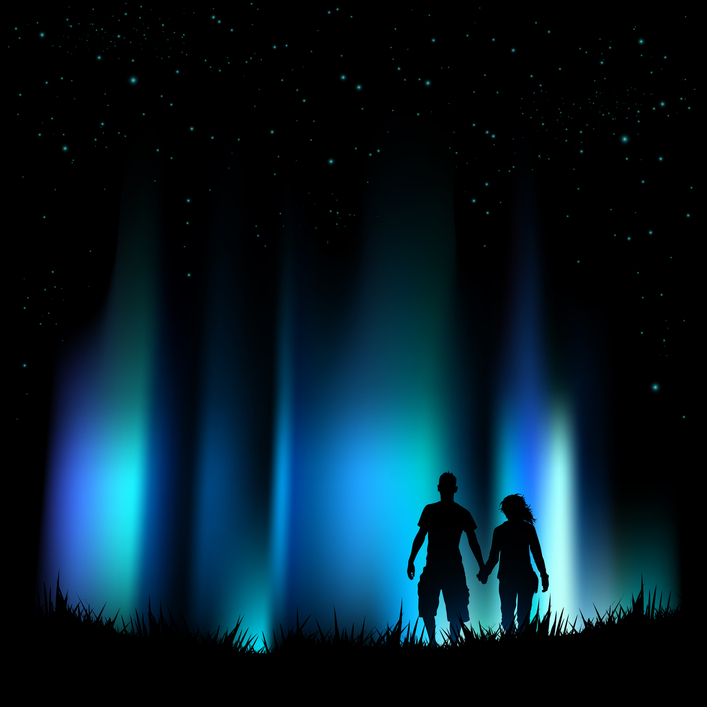
Northern Lights Aurora

Last week, I went to a local writing group meeting. We discussed our current creative challenges. Mine was Elin, the main character in the novel I’m working on. She lost some of her sight after an illness that killed her mother. I claimed I don’t know how to define her world, because I have struggled with how she perceives her world. There was some general discussion about what and how the blind see, which was helpful, but not really the point because it is ultimately a fable about seeing the light, not the dark.

When I left the meeting, I realized that defining Elin’s world is not the greatest challenge I am facing in writing this story. I know that if I sat down every day and let her talk, sooner or later I would learn how she defines her outer life. The problem is that day after day I avoid letting Elin tell her story.

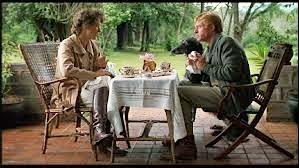
Karen Blixen weaves a tale for Denys Finch Hatton in Out of Africa

In the movie Out of Africa, author Karen Blixen falls in love with the elusive and free spirited Denys Finch Hatton. Seemingly against his will, he falls in love with her too, and the thing that does it for him is her stories. With any random prompt (a spindle and a shoe for example) Karen can weave a full, rich tale right there on the spot, complete with beginning, middle and end. Denys stays up all night listening to Karen’s stories, but one day his prompt is “a girl steps onto a white beach…” Karen is stumped. She opens and closes her mouth many times, but no story issues forth. The girl on the beach is too close to Karen’s own story.

And that is Elin. She is too close to my own story. I know that Elin must learn to forgive. Not the you’ve done something wrong but I forgive you kind. Something much bigger. She must learn to let go of the world she thought she would have, and the person she thought she would be. She has to learn to see that what is waiting for her might be scary and strange, but it is much more magical than anything she could have imagined.

In my novel, Elin grapples with the meaning behind her grandmother’s stories of the Northern Lights. In my own life, I have my own Northern Lights story:

My freshman year of college, I went to a party. A guy I knew from school was there, and he asked me to dance…even though I had clearly come to the party with someone else. I said yes…even though I had clearly come to the party with someone else. We wove through the crowd until we came to a clearing. The music changed to a slow song. I suddenly felt very awkward. I’d never danced slowly with anyone before.

“Come here,” he said to me.

That “come here” felt like so much more than an invitation to step forward into the embrace of a slow dance. It was a call to step forward in my life, to choose not only one boy over another, but one path over another. I remember that his sweatshirt smelled like Tide, and his skin smelled like shaving cream. I remember that there were people talking and laughing around us, but they all seemed very distant. I don’t remember what song was playing; only that like most good things it ended too soon. We stepped away from one another, but I knew my life had changed.

We had one romantic year together. I was young, and I did many things wrong in that relationship. When we broke up, he vowed never to speak to me again. In some ways, I deserved his anger, but he hurt me too. His worst offense was that I believed he was the one who would see my inner artist. He would love that artist, nurture her and bring her whole and beautiful into the world. He fell short.

He was from the north country, and he used to promise me that someday he would take me to a cabin in the woods to see the Northern Lights. I loved the idea and thought of it often. We were both very busy with school, and the idea of having time away to get to know him took up a great deal of my thoughts. I was a late bloomer, and I hadn’t learned the secret pleasures of being a lover. A remote cabin in the Minnesota woods sounded like the perfect place to learn. He never took me there.

Many years later, I taught a dance camp up in Minnesota. It was close to fall, and the nights were chilly. I usually stayed close to the fire in my cabin, but one night the other dance teachers banged on my door. They reeked of peppermint schnapps.

“Get out of your room, Angie. The Northern Lights are out.”

I almost said no. It was cold, everyone else was far ahead of me in drinking, but then I remembered the old promise of the Northern Lights. I grabbed my coat and flashlight and followed them into the woods. We wove through the trees until we found a clearing.

“Look up,” someone whispered.

A green arc of light stretched all the way across the meadow. It vibrated and with every shudder, a new arc of green was born. Out of nowhere, the arcs shimmered and fell like a curtain across the sky. Red moved through the night, spinning like a soloist in the greatest dance I’d ever seen. Blue came too, and then indigo.

There, spread across the sky, was the inner artist I’d always wanted someone to love. If I hadn’t once been promised a chance to see the Northern Lights, I’d never have gone. I’d have stayed home by the fire in my cabin. I went because someone had invited me long before I got there.

I was feeling a little blue about my life recently, and a friend of mine gave me words an old writer might say when reflecting back on her life. It was about falling down and getting up and falling down again. Loving some days and losing others. The beauty of sharing our talent and experience. That is a life truly lived. What a gift!Thanks to my friend, I realized that is exactly what my character Elin must learn. She believes her childhood stories of the Northern Lights are about death and endings, but they are really about the people who light our path. Just like the Northern Lights, they weave themselves into the fabric of our lives in many different colors and help us find our beginnings. They become our life truly lived.

That is the story both Elin and I find in a cold Minnesota meadow. There are many people who have shown me what life has to offer, but none of them were ever here to love my inner artist, or nurture her, or bring her forth into the world. That falls squarely on my own shoulders. I didn’t forgive the hurts of an old romance that day, I accepted its gifts.

The boy who promised me the Northern Lights grew up and became a man. I’ve heard that he has a son. I hope that when he teaches his son about life, he tells him to always ask the girl to dance…even if she came to the party with someone else.

Why I Write


Today is my birthday. This time last year, I was hard at work revising my novel for a prospective agent.  When I sent her my revisions, I was as breathless as if I’d run the novel all the way to New York myself… The rejection took five months. The agent loved it, but she didn’t have time to represent a new author. She was intrigued, but she didn’t know if it was marketable.

There was also the time I got two rejections from two different editors in the same day for the same work.

“This is great,” said editor #1. “But I think the voice is too old for young adult.”

“Beautifully written,” said editor #2. “But I think the voice is too young for young adult.”

Like most aspiring authors, I’ve received a lot of rejection and heard how every author I admire has gotten them too. I know it is part of the process of putting my work out into the world, but as I sit here, a year older but not-so-much the wiser, and still no published work to my name, I have to ask myself:

Why am I here typing in the wee hours of the morning instead of sleeping or catching up on my mountain of laundry or anything else deemed more outwardly productive?

Why do I write?

In olden times, there was a belief that immortality was gained through story and song. To become part of a story was to live beyond our short time on earth. To be stricken from the stories or even worse to never do a deed worthy of the telling was to disappear into a purgatory of lost memory.

My need to get up before the sun to write might put me in the minority, but all of us have a story we need to tell. We all want to remember and be remembered.

When I was a kid, the carnival came to town for one week every year. Our carnival had a mad house with the usual hall of mirrors that made you look fat or tall or skinny. The crazy thing about this mad house was that it looked really small from the outside, but inside it was too wide and deep to be contained by the outer facade. I walked around and through the mad house countless times, but I never could figure out how the illusion worked. I wondered who built that mad house. When he looked at it did he see the illusion of smallness like I did, or could he see how wide and deep it was even when he stood outside?

People are mad houses. We seem small and contained but inside we are all wide and deep. It is a rare and beautiful thing to be allowed inside another person, and just like the carnival, it is usually fleeting. But on a blank page I can hold in my hand what usually slips through my fingers. That human connection.

Stories satisfy a human need to share and be understood. In “real life” those needs aren’t always met. We don’t have the time, or we weren’t brave enough when the time was right. We walk away from love and friendship because somewhere along the way we learn it is better to shoot first than be outdrawn.

I write because human connections are rare. More often than not, we miss each other completely. In stories, we are found…unraveled and fragile, rediscovered in the wide and deep imagination of another. Fleeting and immortal all at once.

Here’s to my connections lost and found. The stories that gave me another beautiful trip around the sun.

Part Two: The Story of the King of Pirates

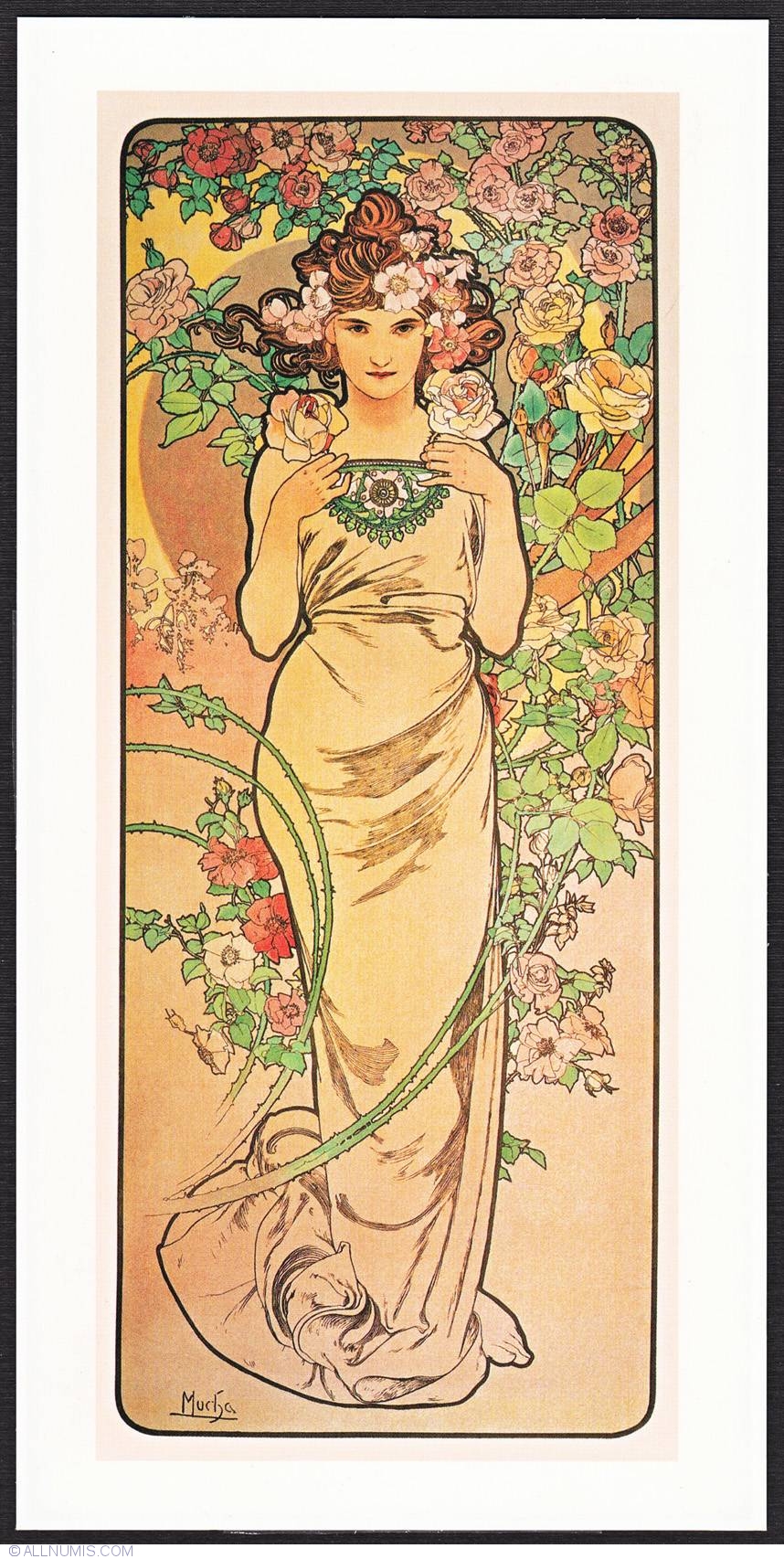
Print: Femme à marguerite  by Alphonse Mucha


There. Just over the horizon. Hidden behind the loping gallop of grey waves against a grey sky. There was land. None knew it but the captain and his navigator…and Samuel Bellamy, a lowly sailor, though his good looks were unsullied by the hard life of his rank. Samuel paid no mind to the constant sway of the ship beneath his feet. He did not bother with the smell of rotten wood and flesh and food or briny air with the metallic threat of rain.

A calling as strong as the sea, a scent that rose in the air. Loamy and dusty. A tender shoot, brand new that fluttered on the spring wind and sang to Samuel of earthly things. That place of new beginnings, opposite of the ancient sea. Samuel felt his heart rise in his chest the way the gulls rose to the sky.

“Land ahead!” he cried before he could stop himself.

The first mate spit over the side of the boat. “You mind your place, boy, or it will be a lashing for you again.” The first mate pointed a finger swollen with gout. “Land ahead!” he cried.

Land. Samuel tripped his way down the docks, but the ocean called out to him as old friends do when they part. He stopped to watch twilight spread over the harbor.

“You are my last,” he said to the decrepit ship that had been more a home to him than anywhere else. He turned his back on ship and sea. The town streets lit happy and yellow. The townspeople dressed bright and lively. Out on the cliffs beyond the city a white clapboard cottage stood dark and silent.

“When I have the money,” said Samuel. “I will buy that cottage. I will fill it with food and furniture and neither of us will ever be empty again.”

He found a tavern to drink off his sea legs. His first steps on the soil of the American colonies, where a man might work hard enough to own a bit of soil for himself.

Can land be owned? A voice poked at the back of Samuel’s mind. Can you really own something that can’t be carried away on your back?

“Ach,” Samuel yelled at himself as he stumbled through cobbled Cape Cod streets, “that is nothing more than the drink talking. Men own land. That’s what men do. Land isn’t like the ever changing sea. And it isn’t plate or a fork or a farthing either.”

You haven’t told me one thing about land but what it isn’t, said the voice. You know nothing of land. It is a thing as living and breathing as the sea. Your ancestors gave up the land long ago, Samuel Bellamy. You will never own one speck of dirt because you are of the sea.

“No, not anymore I’m not. I’m a man.”

Are you now?

Samuel took another beer and drank it fast. The voice drown beneath it, but that night Samuel dreamt that he swam inside the dark and endless sea. The dark was frightening, but he was free. Free of the smell of rot. Free from being owned by the ship’s log and captain and company.

The land ties you down, Samuel Bellamy. The ocean sets you free.

Day came bright and sunny. Samuel’s head barely hurt from the night before. He walked down a path that wound into an orchard of apples. The blossoms on the trees blew everywhere in clouds of white against a blue sky. Here was a world fresh with spring. The call of the dark and endless sea faded from his memory.

Today holds promise, he said to himself. I can feel it in my bones. No voice invaded his mind to tell him he was wrong. Maybe that voice was dead and gone.

“Would I walk down that path again?” Samuel often asked himself when the apple orchard was far behind him. “If I knew then that the feeling in my bones was the promise of love. If I knew then that with love comes the torment of hope…would I walk down that path again?

“Yes.”

Maria sat on a bench in the middle of the orchard. She started to sing, her voice as pure and light as the apple blossoms that fell all around her.

Here is my hidden place

Where I grow the dark

To shroud the light of love

That mythic, burning passion

Acceptance and desire

Hope and longing

The push and pull of twin souls

Kisses turned to constellations

I will not share the lost belief

Hopeless hope grown timeworn

Yellowed and…


                She looked up from the reverie of her song. “Who are you?” she asked.


Samuel smoothed down his tattered clothes. He ran his fingers through hair that needed cutting. I am not worthy of her, he thought.

“Samuel,” he said.

“Why are you walking so fast on such a beautiful day?”

He wanted to leave her before she laughed at him.

“I am walking so fast because I haven’t got any place as pretty to sit,” he said.

“This half of my bench is free.” Maria slid to the edge.

“I have found very little in life to be free.”

“Hmmm,” Maria tilted her head, and blond curls fell across her face in a way that made Samuel hold his breath. “You are more than welcome to pay for it if that makes you more comfortable.”

“Do I look like someone who has much to pay you with?”

“There is more a girl might want than money.”

“What else might a girl want?” What else in the world could there be?

“If a girl asks a man to sit with her on a bench, chances are she might only wish to be repaid with a kiss.” Her words were bold, but she blushed and looked away.

That bench, which was the only place Samuel wanted to be, seemed a million miles away. It would take an eternity of steps to get there. Yet somehow Maria’s lips pressed soft against his, she laughed (not at his expense but at her pleasure), and then she was gone. The best day of his life stretched a lifetime and over too soon all at once.

Samuel thought every meeting with Maria would be his last. He woke from his endless ocean dreams in the middle of the night and burned with the thought of her.

“Send Maria to me one more time,” he prayed to the stars. “Let me kiss her once more, and I will give you anything in return.”

With all of his bartering and promises to heaven, it never dawned on Samuel that Maria came to him each time of her own free will and simply because she liked him too.

But she was rich and he very poor. Her parents didn’t approve of the match.

“I want run away with you,” Maria whispered to him under the moonlight.

“To be a poor man’s wife?”

“You will not be poor for long. I know it.”

“But I am poor now, and I have not got any prospects for that to change. I will not have you alone to scrub the floors with a baby tied to your back and another at your knee and another in your belly. I won’t have you miss meals for children that keep coming. I will not listen to the crying and see them ask for more, and you look up at me with eyes that know I have nothing more to give.”

“Oh, Sam. I would never look at you that way.”

“You say that now because you can kiss me and then go back to your safe and comfortable home.”

“That is not my home. Not anymore. My home is with you.”

Samuel kissed every part of her face.

Tell her you love her. Every part of him ached to say it, but he would not let himself. He spread her out below him instead, and they both learned how to take the ache out between their legs.

Maria sang with joy the whole way back to her parent’s house. Samuel dragged his feet with dread beside her. What if he had made a child that would grow up as hungry and scared as he did? What if Maria was taken from him as his own mother had been?

She is not like your mother, said the old voice.

Samuel pushed the voice away, kissed Maria goodbye and tried to meet her radiant smile with one of his own. He walked to the cliffs and let himself feel the pull of the tide under the full moon.

You are a prince of the sea, the waves sighed. Come back to us. Come back.

“I will only come back if I can bring wealth right up to these cliffs.”

Oh, we will give you wealth. We will bring you back, right here in this place where the moon gives light to the sea foam. It is your destiny, Samuel Bellamy. Will you come back to us?

The smell of apple blossoms danced all around him, and the feel of Maria still clung to his skin. Maria wove deep into every dream he had for his future, and the waves offered all the answers.

“Yes,” he said.

Come. The sea swelled higher. We will make you King of the Pirates.

Maria woke with a lover gone to sea, and the first spark of new life in her belly. She went to the cliffs and looked out over the waves with only one song on her lips.

Samuel.

Part One: The Story of the Birth of the King of Pirates

Coming tomorrow…Part 2 The Story of the King of Pirates

angiemflanagan's avatarFind Your Story

The midwife hurried through a cold, foggy night. She came with an empty stomach, because a family who lived in the sailors’ district could hardly be expected to offer more than dinner as payment. She would roll her eyes, say she could think better with food in her belly, and food she would get. It was always better when there were already children in the house with older girls who could tend to a good meal, but it would have to do.
It will have to do, she mumbled to herself as she knocked at the door. A woman’s shrill cry cut the thick air. The midwife pushed the door open. It looked like dinner would have to wait.
An old sailor, sea-battered and red faced, held his young wife around the shoulders. He wore a red coat and she was in a white nightgown. It seemed to the midwife…

View original post 830 more words

The Higg’s Boson, Cosmic Fire and Friendship

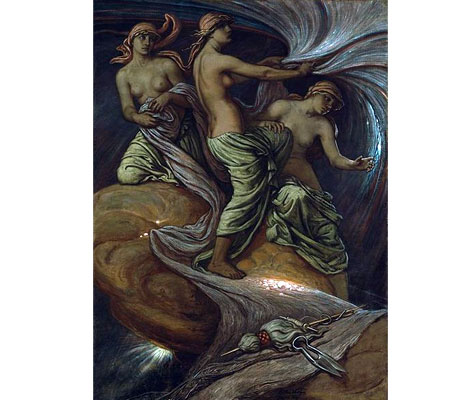
Fates Gathering the Stars by Elihu Vedder, 1887

World War II on the Eastern Front. Ice storms rage around Nazi troops as they press through a forest outside Leningrad. Nestled within this scene of bitter cold and the mounting tension of combat, Lake Ladoga waits still, pure and remarkably unfrozen in spite of temperatures that dip below freezing. Battle erupts, soldiers clash, and the forest bursts into a wildfire. Soviet horses escape their stable, leap through the flames and dive into Lake Ladoga.

The next day, Italian war correspondent Curzio Malaparte walks out onto Lake Ladoga and finds himself surrounded by macabre ice sculptures of dead horses in their final gesture as the lake instantly froze around them. Finnish soldiers play on the horses like toys until the ice cracks in April, and the final moments of the horses of Lake Ladoga disappear below the surface.

Curzio Malaparte wrote about the horses of Lake Ladoga in his autobiographical novel Kaputt. Decades later, Malaparte’s story was taken up by astrophysicist Hubert Reeves as an example of a “phase shift” in physics. Normally when water reaches the point of freezing, the molecules turn in on themselves and crystalize. Sometimes when water is very still and pure there is nothing for the crystal to attach to, and the water remains liquid. There is tension in this state though, because the cold is pressing all around, and any disturbance will create an instant shift from liquid to ice. In the case of Lake Ladoga, it was the horses that allowed this shift to happen. Hubert Reeves used the horses of Lake Ladoga as a cosmic analogy of the early state of the Universe when pure energy shifted to matter. In the case of the Universe, it was the Higg’s Boson that allowed this shift to happen.

Click here to watch an example of super cool water.

American filmmaker Walter Murch spends his spare time consuming science books but while on location in France, he found himself out of reading material. He wandered down to the local bookshop where he picked up the French book on cosmology by Hubert Reeves with the Lake Ladoga anecdote by Curzio Malaparte. Murch became so fascinated by Malaparte’s story that he translated his work into English. Murch published The Bird That Swallowed its Cage: The Selected Writings of Curzio Malaparte. Murch also went on to make a documentary on the search for the Higg’s Boson where Malaparte’s horses of Lake Ladoga was used again to illustrate the phase shift from pure energy to matter.

Click here for more on Murch, Malaparte and the documentary Particle Fever

It seems to me that the story of Malaparte and Murch is its own little universal shift. An Italian anecdote on the ravages of war waits to be used in a French book on cosmology. A French book on cosmology waits to be read by an American filmmaker. Walter Murch is inspired to translate the nonscientific work of an Italian writer by a French work of science. Walter Murch goes on to make a documentary on the search for the Higg’s Boson, one of the greatest scientific discoveries of the 21st Century.  There is the universe of the Universe, and then there is the universe of Nature, and then there are the universes of our own little, individual lives.

And like Lake Lagoda I have waited pure and still and tense with the potential for change.

What becomes of you when someone else happens along and dips their finger in your lake? A sudden shift from energy to matter…an idea turned to a story or a song or a work of art or a class you always wanted to take but never had the guts….

Ekpyrosis, a word of ancient Greek origin. Defined as “conversion into fire.” The destruction that will convert the cosmos to re-creation. And from this ancient Greek word was named the ecpyrotic model of the Universe, the theory that the Universe did not start out as a singularity, but as a collision of two three dimensional worlds.

And here is where my musings will completely destroy the hard work of physics.

In my imagination, we are all our own little worlds. Connected by a string, we are spread like a necklace through the darkness. Every now and then “someone” or “something” shakes the string. We collide unexpectedly (though perhaps fatefully) with another world, another person. A whole new universe is created from the collision of two bodies. We could call it ekpyrotic friendship, this shift that allows it to happen.

My physics may be faulty, but my intentions are true. The best things in life are born from the fire of ekpyrotic friendship. Thank the Universe for them.

…or I would be a lake pure and still but without a story to tell.

The Story of the Queen and the Selchie

Stormy days remind me of the sea folk….

angiemflanagan's avatarFind Your Story

Long ago, the greatness of a warrior was measured by the strength of his adversaries. In all the known lands, the children of the Lochlann king were by far the best fighters. There were eight of them, four boys and four girls, all of them beautiful to behold with their fair skin, dark hair and wide, brown eyes.

At that time, and in that place, the mothers were responsible for training their children in combat, and the Lochlann queen was an unrivaled teacher. Each of her children held a special gift in endurance, strength, speed, grace and many other qualities beside, so that a band of eight of them might defeat a whole army. As they grew, they became the target of many who wished to be remembered in the songs for their bravery.

But the children were still quite young when their mother was laid to rest on a…

View original post 1,876 more words

Blog at WordPress.com.

Up ↑